


Anchored in Grace, Giving It all Back
Inspired by faith and crafted with care, we create quality soaps and lotions designed to bring a little joy, comfort, and refreshment into everyday life. But for us, it’s about more than what we make—it’s about why we make it.
We believe we are blessed so that we can be a blessing to others. That’s why we are committed to giving back, dedicating the available net profits of our small business to support charitable causes, serve our communities, and help those in need.
Thank you for supporting Nikayon Soapworks Co. and being part of a journey where faith inspires our work, quality reflects our care, and generosity is at the heart of everything we do.
Inspired by Faith. Crafted with Care. Given with Purpose.
Welcome to Nikayon Soapworks Co.
Free Shipping on All Orders $33 or More
✝️
Free Shipping on All Orders $33 or More ✝️
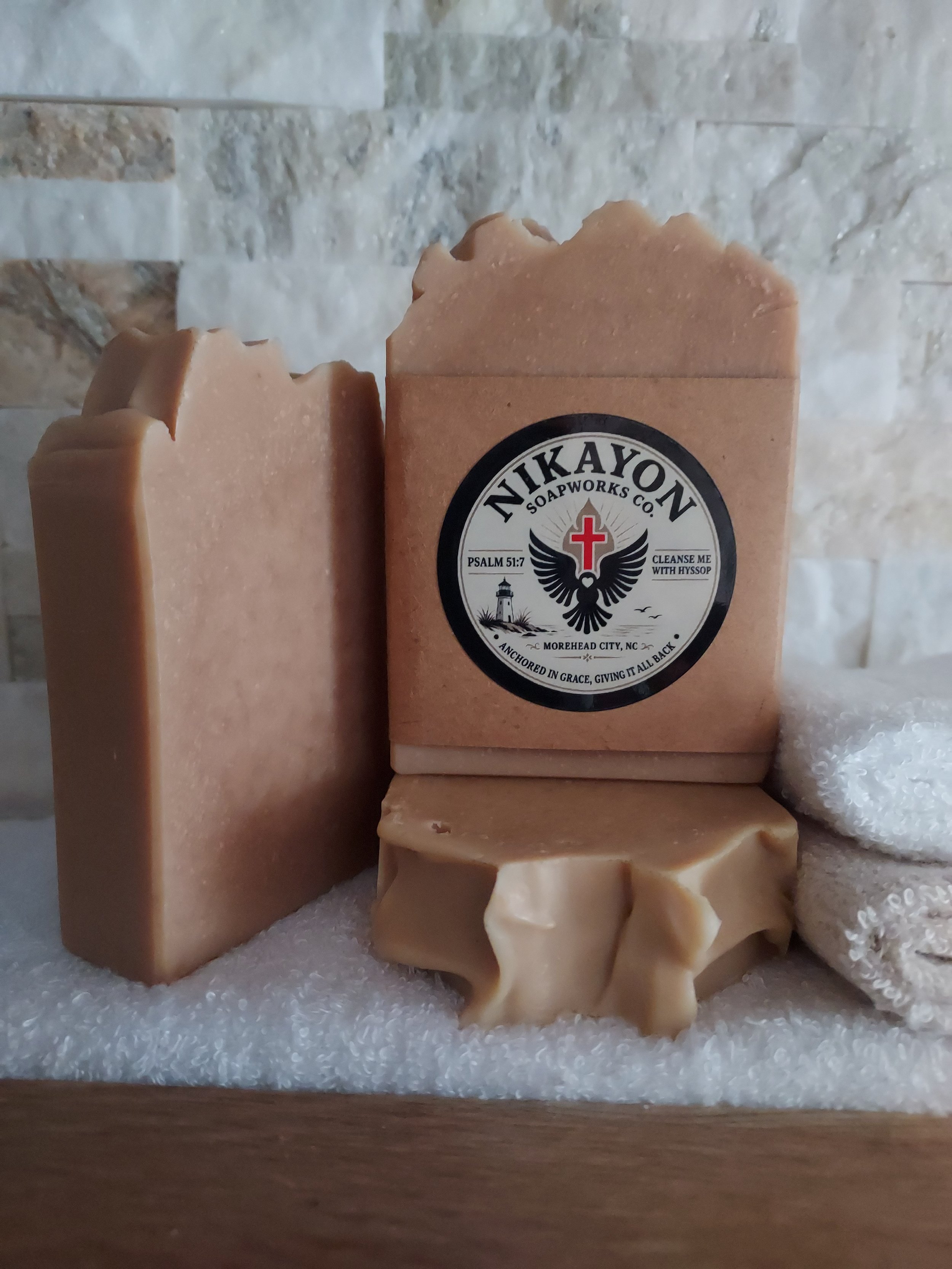
🐝 Indulge in the simple goodness of handcrafted Oatmeal, Milk and Honey Goat Milk Soap, inspired by the gentle comforts of nature. With its warm, inviting scent and timeless appeal, Heavenly Harvest brings a little everyday comfort to your cleansing routine.
Each bar weighs approximately 5.5 oz. Handcrafted with care, every bar is unique, with slight variations in size, shape, weight, and natural color—a natural part of handmade soap.
Ingredients: Goat Milk, Olive Oil, Coconut Oil, Palm Oil, Sodium Hydroxide and Oatmeal, Milk and Honey Essential Oils.
“A Little Heaven in Every Bar”
📜 Exodus 3:8—And I am come down to deliver them out of the hand of the Egyptians, and to bring them up out of that land unto a good land and a large, unto a land flowing with milk and honey; unto the place of the Canaanites, and the Hittites, and the Amorites, and the Perizzites, and the Hivites, and the Jebusites.
Speaking to Moses from a bush burning with miraculous fire (Exodus 3:1–7), God promises two actions. First, He plans to rescue the nation of Israel from Egyptian slavery (Exodus 2:23–25). The idea of "coming down" likely connects with the plagues He would later use against the Egyptians. It evokes a powerful king coming from His throne to wield His power.
Second, God will "bring [Israel] up" from Egypt into a new land. The land God intends to bring Israel into was "up" in the sense of being at a generally higher elevation from sea level. But the main implication is that this will be a significant improvement from their state in slavery.
This is Scripture's first use of a description repeated throughout the rest of the Old Testament. The place where Israel is going is good, "broad"—meaning large—"flowing with milk and honey," and occupied by six other nations at that time. The phrase "milk and honey" refers to a land full of good things, including food. This contrasts with the desert region of Egypt where milk and honey were difficult commodities to obtain. The six nations mentioned—sometimes listed as seven nations, such as in Deuteronomy 7:1—will frequently be repeated in the Old Testament. They are condemned for worshipping other gods and engaging in depraved sins. God would remove these strong nations to provide a land where His people could live in holiness.
Source Attribution: Scripture commentary provided by BibleRef.
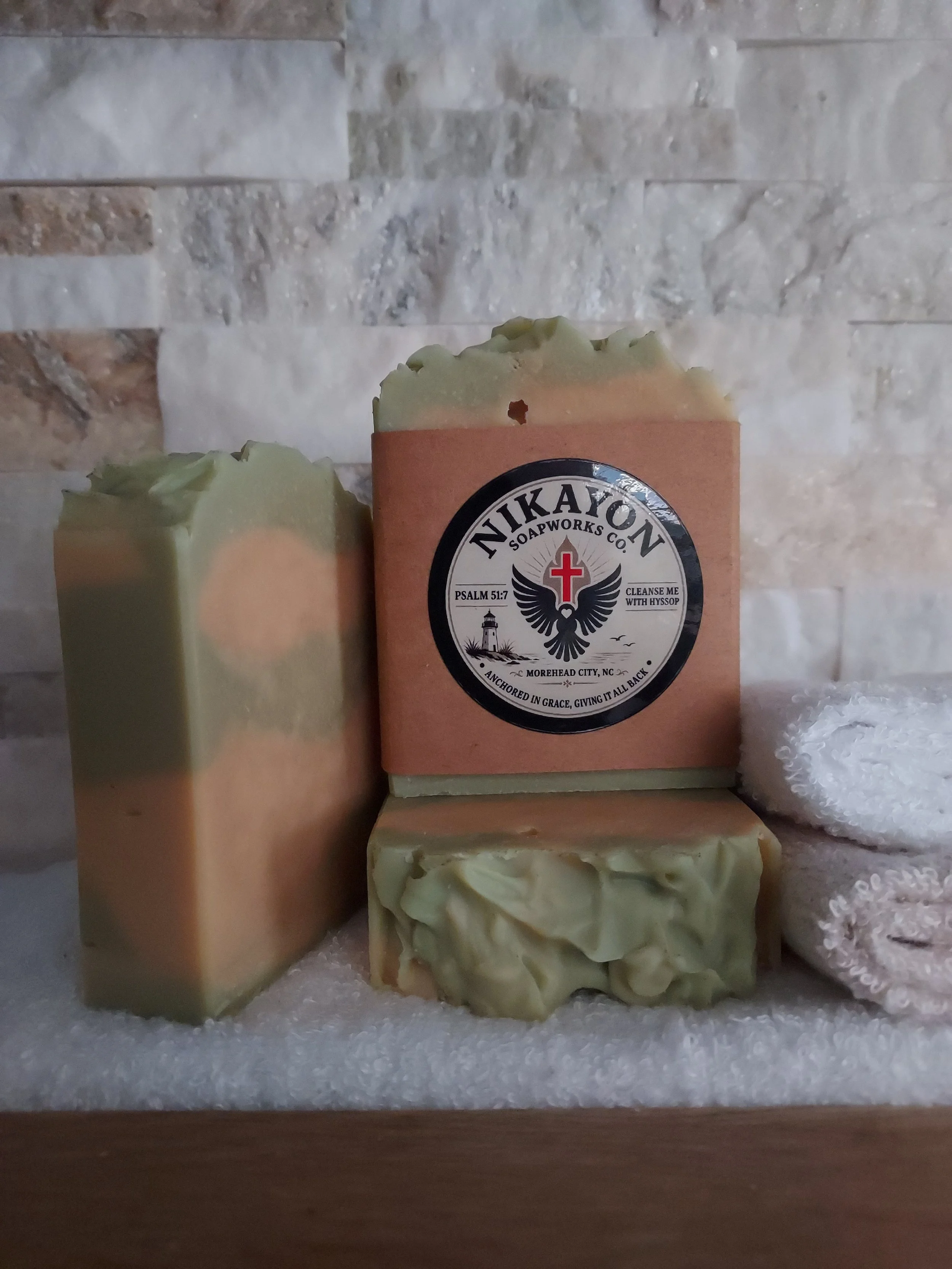
🌿 Refresh your senses with the crisp, invigorating aroma of eucalyptus and cool spearmint. This refreshing blend brings together clean herbal notes and a touch of minty freshness, creating a revitalizing addition to your daily routine.
Each bar weighs approximately 5.5 oz. Handcrafted with care, every bar is unique, with slight variations in size, shape, weight, and natural color—a natural part of handmade soap.
Ingredients: Goat Milk, Olive Oil, Coconut Oil, Palm Oil, Sodium Hydroxide and Eucalyptus and Spearmint Essential Oils.
“Refresh Your Senses, Renew Your Spirit”
✝️ Psalm 51:10—God, create a clean heart for me and renew a steadfast spirit within me.
David's heart had been full of lust for Bathsheba, murderous plans for Uriah, and rebellion against God. He desired a new heart, one that was full of love for God and abhorrence of evil. Sin in his heart had brought him nothing but guilt, grief, and remorse. He wanted spiritual heart surgery that only God could perform.
Jesus cited the heart as the source of either good or evil. He explained: "The good person out of the good treasure of his heart produces good, and the evil person out of his evil treasure produces evil, for out of the abundance of the heart his mouth speaks" (Luke 6:45). Jesus also said that "everyone who looks at a woman with lustful intent has already committed adultery with her in his heart" (Matthew 5:28). David, therefore, had committed adultery with Bathsheba in his heart before the physical act of adultery took place. He needed a new heart. But he also asked the Lord to renew a right spirit within him (Psalm 51:10). He wanted the kind of spirit that would obey the Lord at all times.
Source Attribution: Scripture commentary provided by BibleRef.
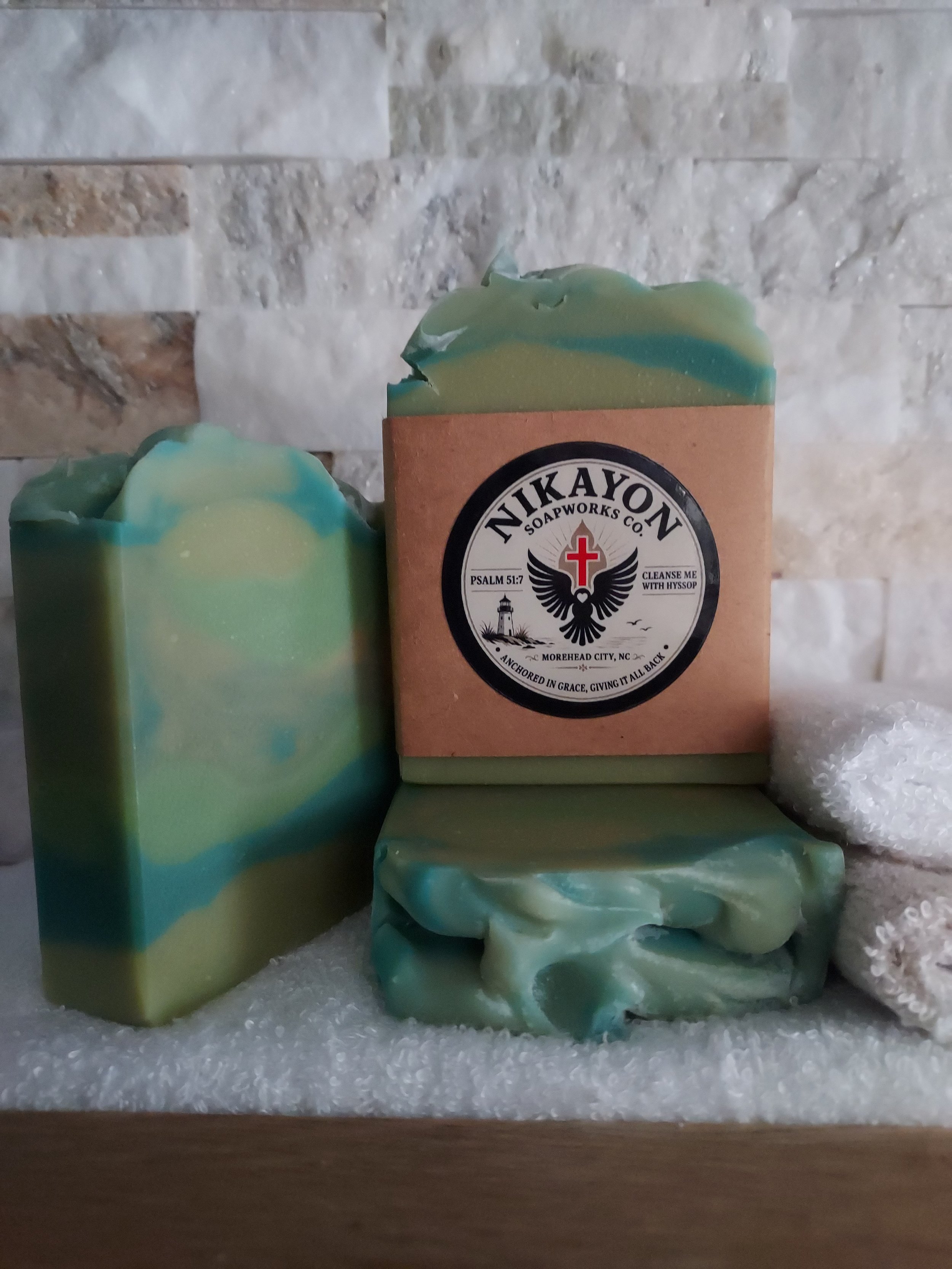
🌿 Inspired by the beauty of God’s creation, Eden’s Breeze brings a refreshing touch of nature to your daily cleansing routine. Handcrafted in small batches with care, this beautiful bar offers a gentle reminder of the peace, beauty, and goodness found in God’s handiwork.
Each bar weighs approximately 5.5 oz. Handcrafted with care, every bar is unique, with slight variations in size, shape, weight, and natural color—a natural part of handmade soap.
Ingredients: Goat Milk, Olive Oil, Coconut Oil, Palm Oil, Sodium Hydroxide and Scented Essential Oils.
“A Breath of Eden’s Beauty”
✝️ Genesis 2:8—The Lord God planted a garden in Eden, in the east, and there he placed the man he had formed.
After forming the first human being, God planted a garden in a region called Eden. English translations of this verse all include some concept of "east" in describing the location of this garden. The original Hebrew says gan b ē'den mi qe'dem, which most literally means "a garden towards the east, in Eden." It should be pointed out that "Eden," literally speaking, is the territory where the garden is located, not the actual garden itself. From the geography given in the following verses, it seems logical to conclude that Eden was in the region of Mesopotamia. By implication, Genesis' original audience would have been to the west of that area.
The first chapter of Genesis shows God as a provider. In each of the first three days, He fashions an environment suitable for a later creation. On days four, five, and six of the creation week, God places a new creation into each of those prepared places. Here, we see God making provisions for man, planting a garden of trees, and placing the man there. This garden would be man's first home.
Source Attribution: Scripture commentary provided by BibleRef.
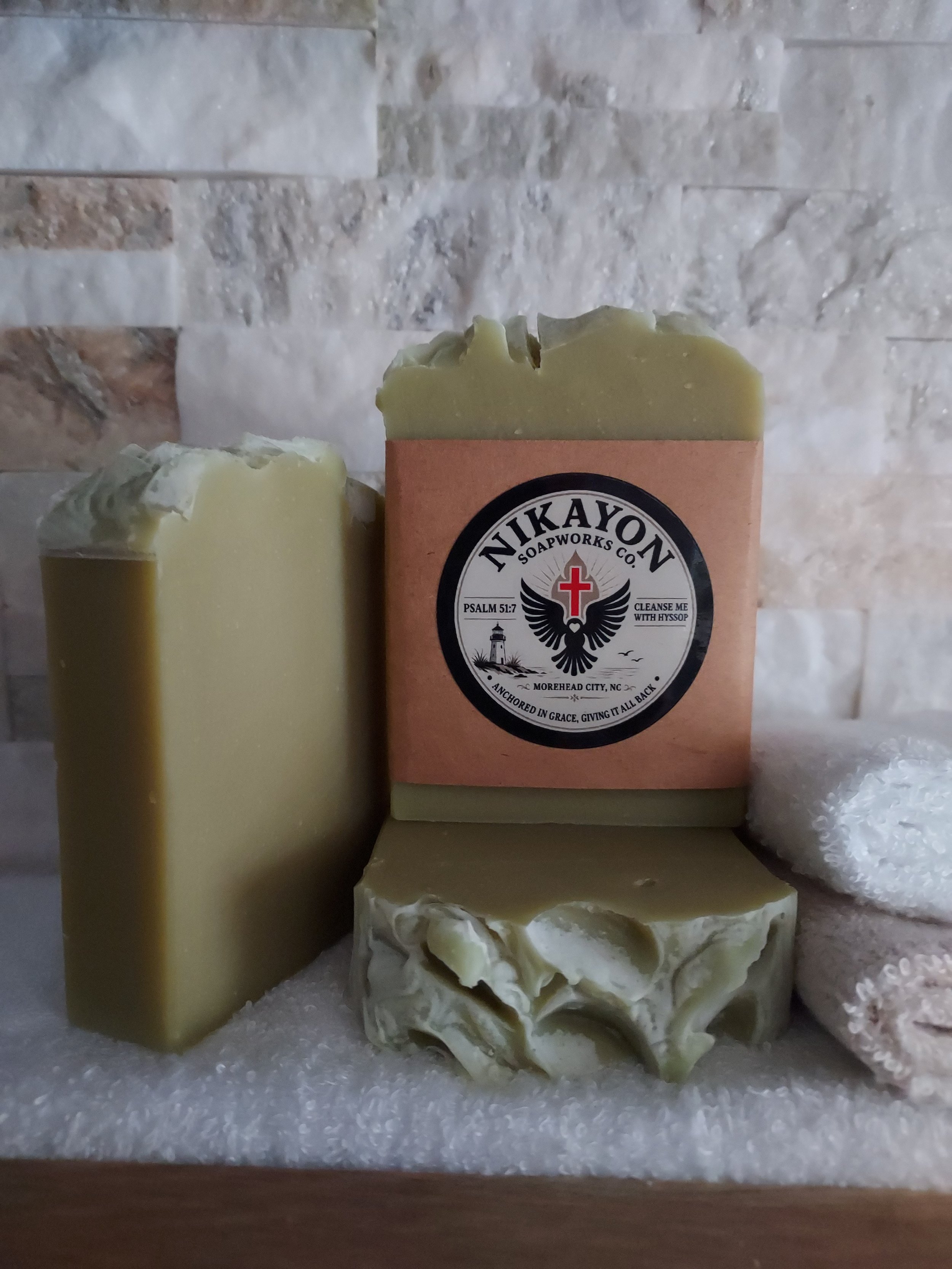
🌊 Bring the refreshing beauty of the coast to your daily bathing routine with our Sea Salt & Lily Goat Milk Soap. Inspired by ocean breezes and the delicate fragrance of blooming lilies, this clean, airy floral blend creates a refreshing bathing experience. Handcrafted with care using the traditional cold-process method, each bar offers its own natural beauty and unique character.
Each bar weighs approximately 5.5 oz. Handcrafted with care, every bar is unique, with slight variations in size, shape, weight, and natural color—a natural part of handmade soap.
Ingredients: Goat Milk, Olive Oil, Coconut Oil, Palm Oil, Sodium Hydroxide and Sea Salt & Lily Essential Oils.
“Coastal Freshness, Heavenly Grace”
✝️ Luke 12:27—Consider the lilies how they grow: they toil not, they spin not; and yet I say unto you, that Solomon in all his glory was not arrayed like one of these.
Jesus is explaining that God has more important uses for our energy than worrying. We have no good reason to panic about starvation, nakedness, or even death. In Luke 12:24, He reminds a crowd that ravens neither work nor store food in barns, but God feeds them regardless. Here, Jesus points out that God adorns the grasses with beautiful wildflowers even if they are destined to be burned the next day (Luke 12:28). The grasses don't work or worry about what they will wear. God provides.
If God loves us more than ravens, and the grasses' dress is more beautiful than Solomon's clothing, the wealthiest of all Israel's kings, there is no point in worrying about food to eat or clothes to wear. This verse isn't saying that God will give His followers clothing as beautiful as Solomon's. Nor is it saying we do not have to work to eat or be clothed. It means it is useless to invest energy into fear or angst about such things.
Solomon was the son of David and the third king of Israel. He was known for his God-given wisdom and great wealth. "Lily" isn't a specific plant; rather, as "raven" means any crow (Luke 12:24), lily refers to any flower. "Toil," of course, means to work hard. "Spin" refers to spinning wool into yarn to knit or weave clothing. The flowers do not work hard to decorate the grass; God does all the work.
Source Attribution: Scripture commentary provided by BibleRef.
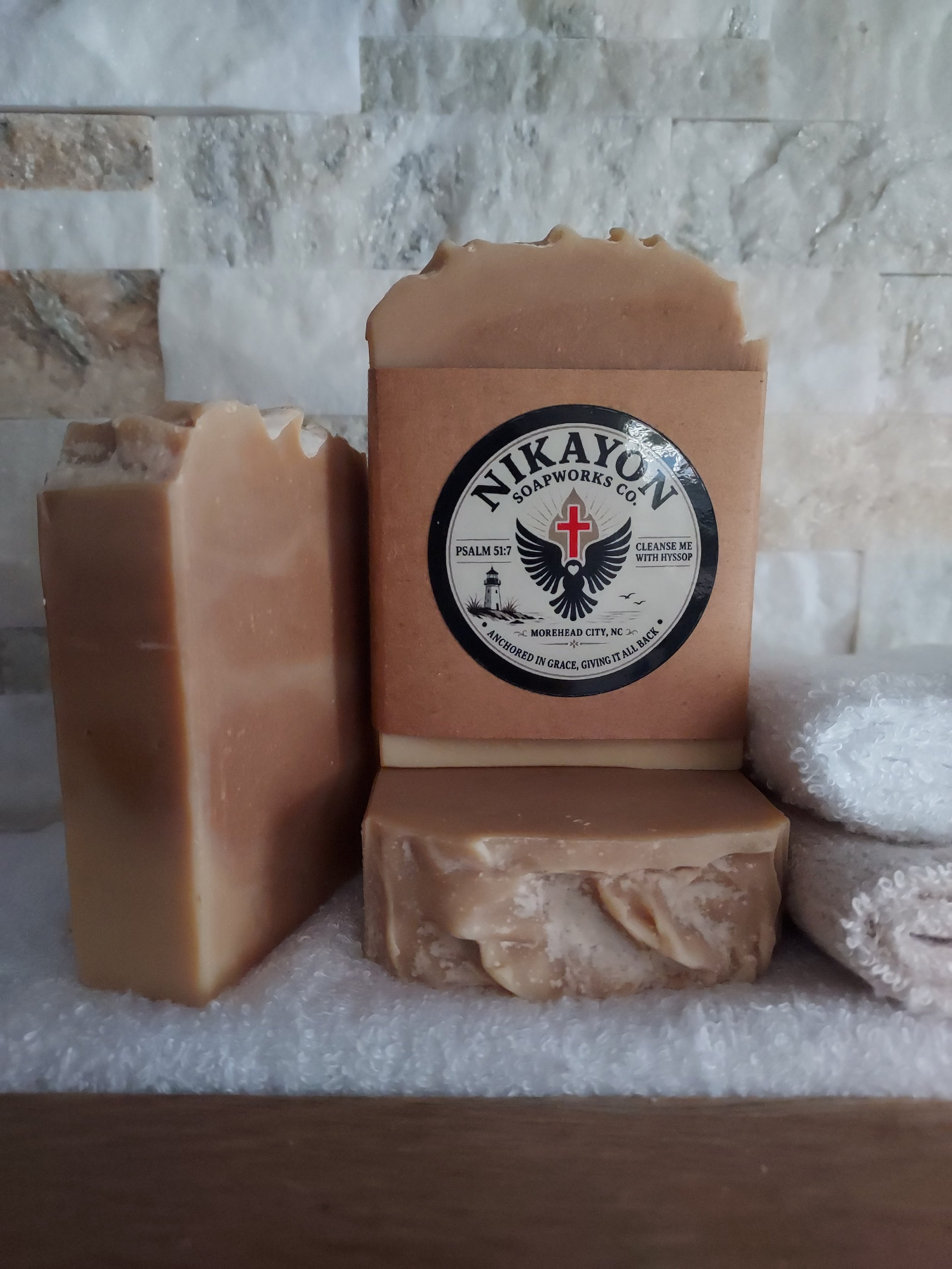
✨ Experience the rich, earthy aroma of frankincense and myrrh, inspired by the precious gifts presented to Jesus by the wise men. This handcrafted soap brings together warm, resinous notes and an enduring sense of peace and reverence.
Each bar weighs approximately 5.5 oz. Handcrafted with care, every bar is unique, with slight variations in size, shape, weight, and natural color—a natural part of handmade soap.
Ingredients: Goat Milk, Olive Oil, Coconut Oil, Palm Oil, Sodium Hydroxide and Frankincense and Myrrh Essential Oil.
“Gifts of the Wise Men, Crafted by Hand”
📖 Matthew 2:11—Entering the house, they saw the child with Mary his mother, and falling to their knees, they worshiped him. Then they opened their treasures and presented him with gifts: gold, frankincense, and myrrh.
The previous verse tells us how joyful the wise men, or "Magi," were at fulfilling their quest to find the child they knew as the long-prophesied "King of the Jews." We don't have any details as to whether they understood Jesus to be the Son of God, or if they had any inkling of how He might save or reign over Israel. They were men who were deeply interested in astrology and astronomy and ancient prophecies and, perhaps, dreams and supernatural happenings.
What we do know is they believed Jesus to be a true and significant king whose birth fulfilled prophecy. They understood Him to be the Christ of Israel and worthy of worship, at least in the sense of paying homage due to a royal superior. Some scholars believe these men were kings of some sort, because their actions here may fulfill prophecies found in the Old Testament (Psalm 68:29; Psalm 72:10–11; Isaiah 60:6; Isaiah 49:7).
This moment does not happen at the stable on the night Jesus was born. Tradition, especially miniature sculptures from nativity scenes, places the wise men in the stable worshipping Jesus in His manger (Luke 2:7). However, the Bible indicates that several months to as long as two years have passed since that night. By now, Joseph, Mary, and Jesus have settled into a house in Bethlehem, though Joseph's hometown is in Nazareth in the northern part of Israel known as Galilee.
The wise men fall down before the child in a gesture of deep respect and submission. Jesus is with Mary, his mother, but their worship is clearly specified as being for Christ alone. They produce the extremely valuable gifts they have brought with them and place them before Jesus. Giving gifts to a king or other superior was a common Middle Eastern practice and a sign of great respect.
The gifts included gold, frankincense, and myrrh. Frankincense is a gum or resin that glitters and was used for religious incense to create a specific aroma. Myrrh also had a strong smell and was used for perfume and embalming. All three gifts were quite costly. Fortunately, these would have greatly helped Joseph and Mary to fund their emergency trip to Egypt to flee from Herod (Matthew 2:13).
This particular text does not connect these gifts to any specific symbolism. However, many scholars and commentators have done so. It's likely that gold represents Jesus' royalty. Frankincense would symbolize His divinity and priesthood. Myrrh would foreshadow His death and resurrection.
Source Attribution: Scripture commentary provided by BibleRef.
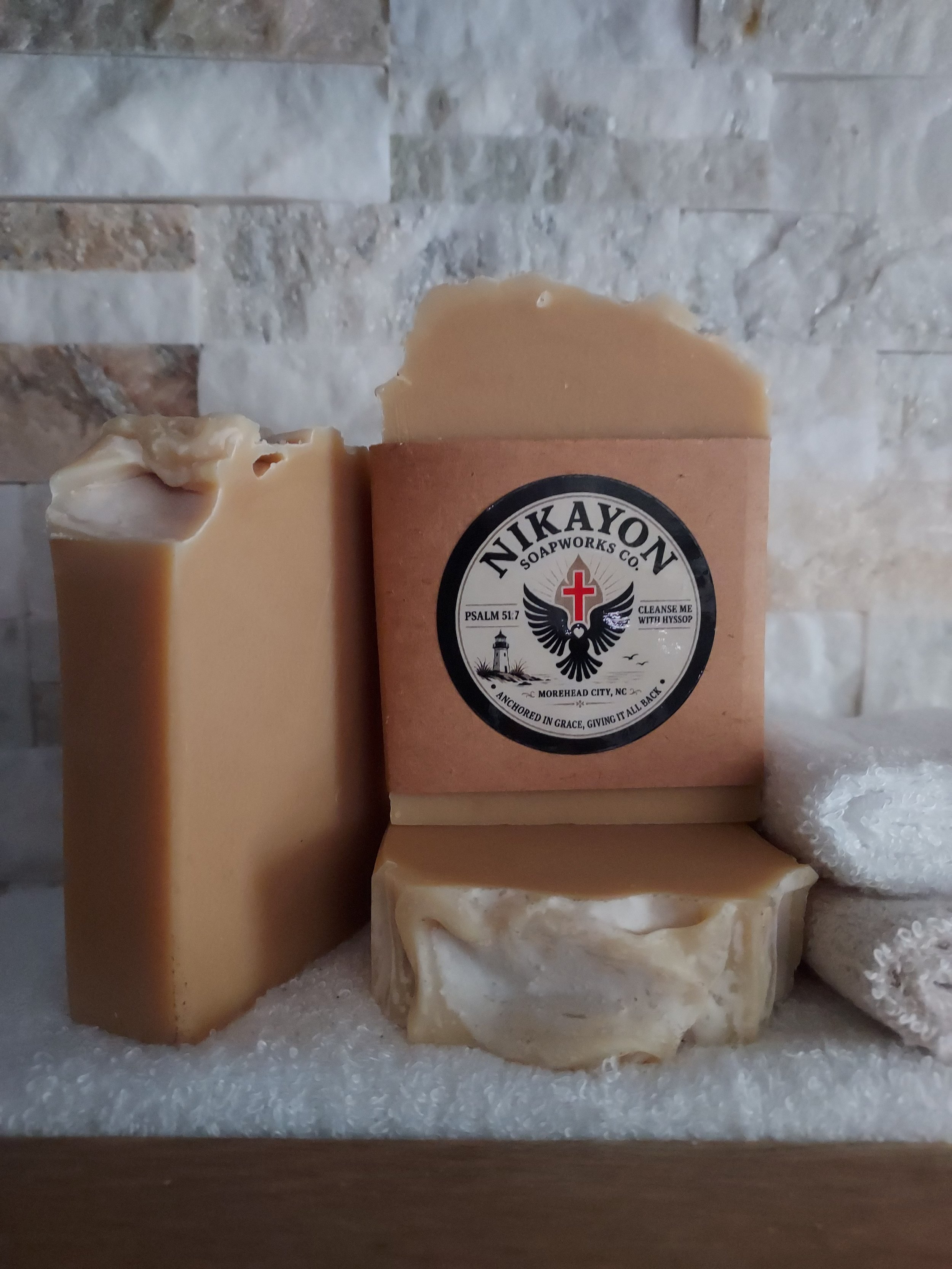
🌿 Enjoy the fresh, clean scent of freshly laundered cotton kissed by a gentle breeze. This light, airy fragrance brings a feeling of simplicity and comfort, making every bath a refreshing moment of peace.
Each bar weighs approximately 5.5 oz. Handcrafted with care, every bar is unique, with slight variations in size, shape, weight, and natural color—a natural part of handmade soap.
Ingredients: Goat Milk, Olive Oil, Coconut Oil, Palm Oil, Sodium Hydroxide and Crisp Cotton Essential Oils.
“Freshness in Every Bar, Grace in Every Day”
📖 Psalm 51:7—Purify me with hyssop, and I will be clean; wash me, and I will be whiter than snow.
Again, David pleads for cleansing. He asks the Lord to purge him with hyssop to make him clean and to wash him to make him whiter than snow. To purge meant to purify by removing a stain. Hyssop was a plant that the priests used in ceremonial cleansings. They dipped a bunch of hyssop in the blood of a sacrificial animal and then sprinkled the blood on the person who required cleansing. Leviticus 14:4–7 refers to the use of blood-dipped hyssop in sprinkling seven times the person who is to be cleansed of leprosy.
David recognized that he would be whiter than snow if the Lord washed away his sin. In Isaiah 1:18 the Lord invited the sinful people of Judah to come to Him and reason with Him, promising, "Though your sins be as scarlet, they shall be as white as snow; though they are red like crimson, they shall become like wool." When Jesus washed His disciples' feet in the upper room, He told unwilling Peter he would have no share with Him unless He washed them (John 13:8).
Source Attribution: Scripture commentary provided by BibleRef.
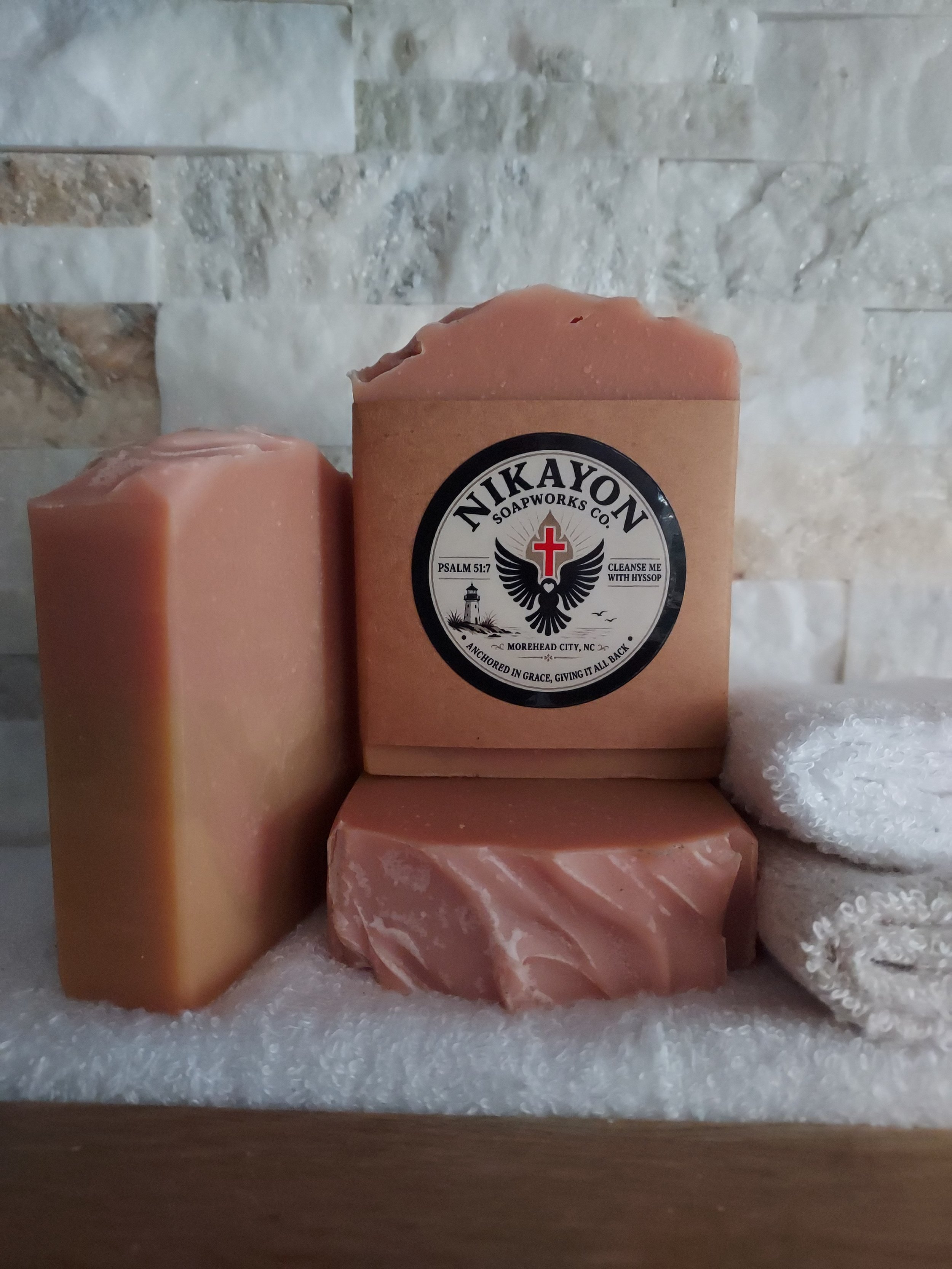
🍑 Enjoy the sweet, sun-kissed scent of ripe peaches and juicy apricots. This delightful, handcrafted soap blends fruity sweetness with a soft, refreshing fragrance, bringing a little sunshine and sweetness to your daily routine.
Each bar weighs approximately 5.5 oz. Handcrafted with care, every bar is unique, with slight variations in size, shape, weight, and natural color—a natural part of handmade soap.
Ingredients: Goat Milk, Olive Oil, Coconut Oil, Palm Oil, Sodium Hydroxide and Apricot & Peach Essential Oils.
“A Little Sweetness, A Touch of Grace”
📜 Galatians 5:23—But the fruit of the Spirit is love, joy, peace, patience, kindness, goodness, faithfulness, gentleness, and self-control. The law is not against such things.
What should the lives of those who are free in Christ look like? In other words, how should Christians live if we are not under the law of Moses? Paul has answered that question in two ways so far. First, Christians must not squander our freedom in Christ, which is freedom from under the law, by serving only ourselves (Galatians 5:13–15). That leads to a laundry list of sinful lifestyles. Instead, Paul has written, those in Christ should allow God's Spirit to lead them into powerful service to others motivated by love (Galatians 5:16–21).
Now Paul begins to offer a new list. This describes what those in Christ should expect to see flowing from their lives when they let the Holy Spirit lead them. Paul calls this the "fruit of the Spirit." It's helpful to understand this is meant to imply a single fruit—the Greek term is singular. This is not a list of nine separate fruits, but nine characteristics of the (single) fruit of the Spirit. In Christ, we should expect to see all of these characteristics showing up together as we give God's Spirit control. They come in no particular order, or rank, or schedule.
Paul begins with love, from the Greek term agapē. This is famously described as "selfless love," or an attitude that considers other people more than ourselves, without expecting anything in return. God's Spirit in us produces God's unconditional love in us for Him and for others (1 Corinthians 13:4–13).
Joy is translated from the Greek chara, which does not necessarily imply happiness. "Joy," in a biblical sense, is best described as an inner confidence. This allows us to declare to our soul that all is well with us, now and forever, because of our place in Christ. Supernatural peace comes as a result of trusting God and is not dependent on our circumstances (Philippians 4:4–9).
Peace is the concept of restful, assured stillness. This is different from something frozen or fearful. It's not the same as being restrained, nor does it mean a lack of motivation. Biblical "peace" involves emotions such as assurance, and an overall sense of spiritual calm.
Patience is the ability, in the Spirit, to wait on God's perfect timing even when our personal agenda seems to be failing. Translated from the term makrothymia, "patience" includes controlling our response to circumstances. This contrasts with the error Paul gave in verse 20, translated "fits of anger," from the related word thymoi. Scripture uses the term "patience" to mean an ability to endure hardship—to "weather the storm."
Kindness may be simple, but it is not always easy. The original term, chrēstotēs, includes concepts of being good and gentle. In the Spirit, we can be kind to anyone, even those who are challenging and offensive.
Goodness is the ability to do the right thing in every circumstance. The term agathōsynē implies a moral decency: this describes someone respectable, honorable, and righteous.
Faithfulness is a crucial word, from the Greek term pistis, frequently translated simply as "faith" in the New Testament. This represents a kind of endurance, driven by trust. In the Spirit, Christians can keep going in the right direction, even when we don't fully understand all God is doing.
Gentleness is not to be misunderstood as weakness or a willingness to let others always have their way. Instead, this is the supernatural ability in the Spirit's power not to demand control or be extreme in our responses. Rather, we can submit to God's control over whatever situation we are in. The Greek word used here is prautēs, which implies someone humble and tranquil, not frail or fragile.
The final characteristic of the fruit of the Spirit is self-control, from the original word enkrateia. This is an important inclusion, since it helps prove that God does not intend His Spirit to overcome our will and possess us, turning us into robotic servants. In the context of our relationship with Christ, self-control is the supernatural ability to submit our will to His leading in our lives. A Spirit-controlled person is always in full control of his or her own mind, body, and words. This contrasts with Paul's condemnation of sins such as sensuality and impurity, from verses 19 and 20.
Source Attribution: Scripture commentary provided by BibleRef.
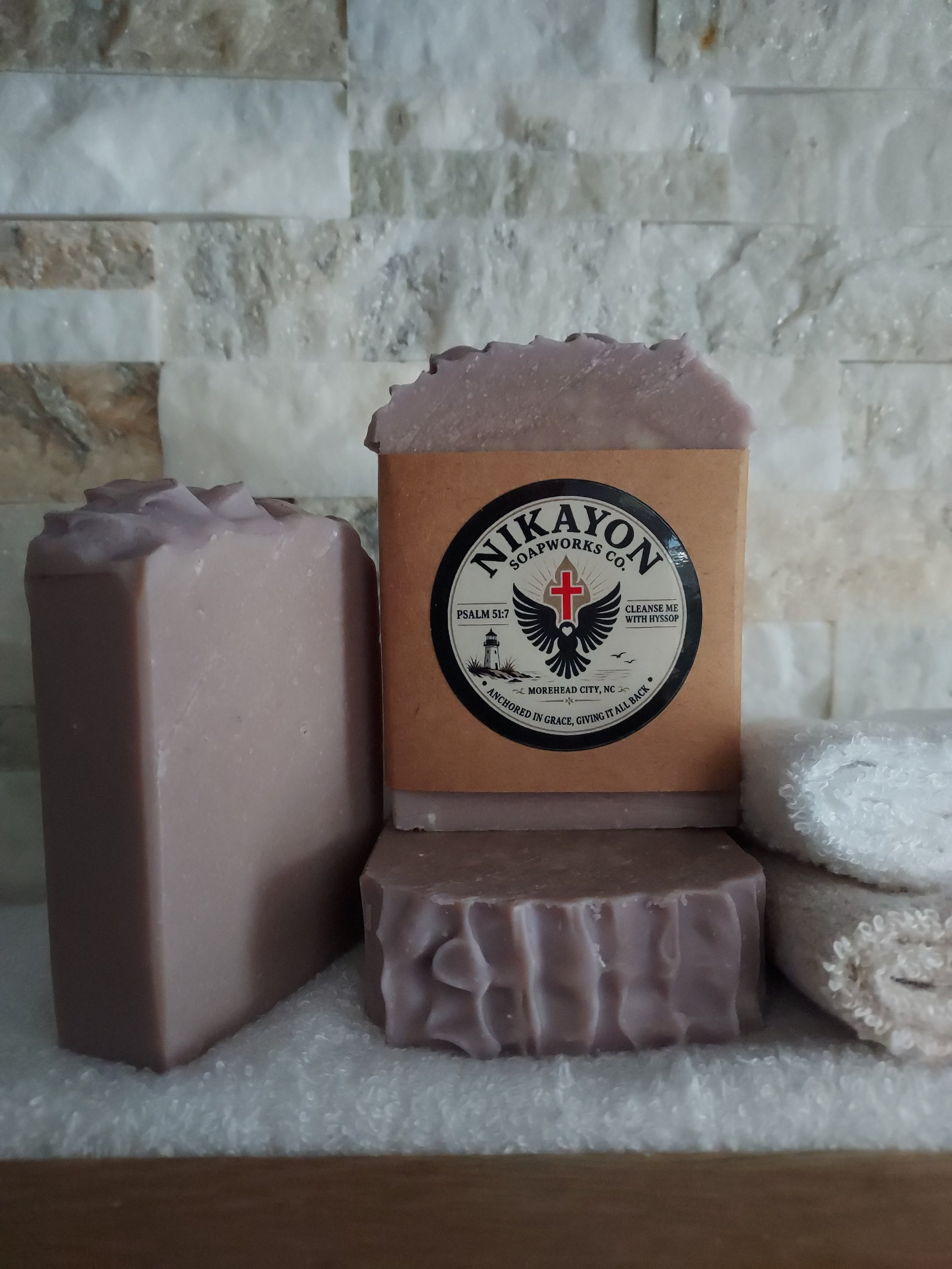
🪻 Immerse yourself in the gentle, soothing fragrance of lavender, with its delicate floral notes and timeless natural beauty. This classic scent brings a touch of calm and tranquility to your daily bathing routine.
Each bar weighs approximately 5.5 oz. Handcrafted with care, every bar is unique, with slight variations in size, shape, weight, and natural color—a natural part of handmade soap.
Ingredients: Goat Milk, Olive Oil, Coconut Oil, Palm Oil, Sodium Hydroxide and Lavender Essential Oil.
“Peace for the Senses, Grace for the Soul”
✝️ Psalm 23:2—He lets me lie down in green pastures; he leads me beside quiet waters.
David writes that the Lord provides rest in green pastures and guides him to still waters. Shepherds in biblical times did not "drive" their sheep. Instead of pushing the herd from behind, they walked ahead of the flock, which followed. The land of Israel did not have plentiful, verdant pastureland except in the rainy season. Shepherds needed to guide their sheep to green pasture, otherwise the sheep would go hungry.
Further, sheep will not drink from a rushing stream. Nor will they instinctively seek out clean water—they are prone to drinking whatever is nearby. Therefore, a good shepherd leads his sheep to calm, clean water.
As a good shepherd, the Lord guided David to green pasture; that is, He provided well for David, giving him abundance, rest, and peace. Jesus, the Good Shepherd, provides all of this care for His followers. He gives us rest (Matthew 11:28), abundance (Matthew 6:33; John 10:10; Ephesians 1:3; Philippians 4:19), and peace (John 14:27).
Just as a shepherd in Bible times knew his sheep by name, so our Good Shepherd knows us personally and calls us by name (John 10:3). We should be quick to heed His call and follow Him!
Source Attribution: Scripture commentary provided by BibleRef.
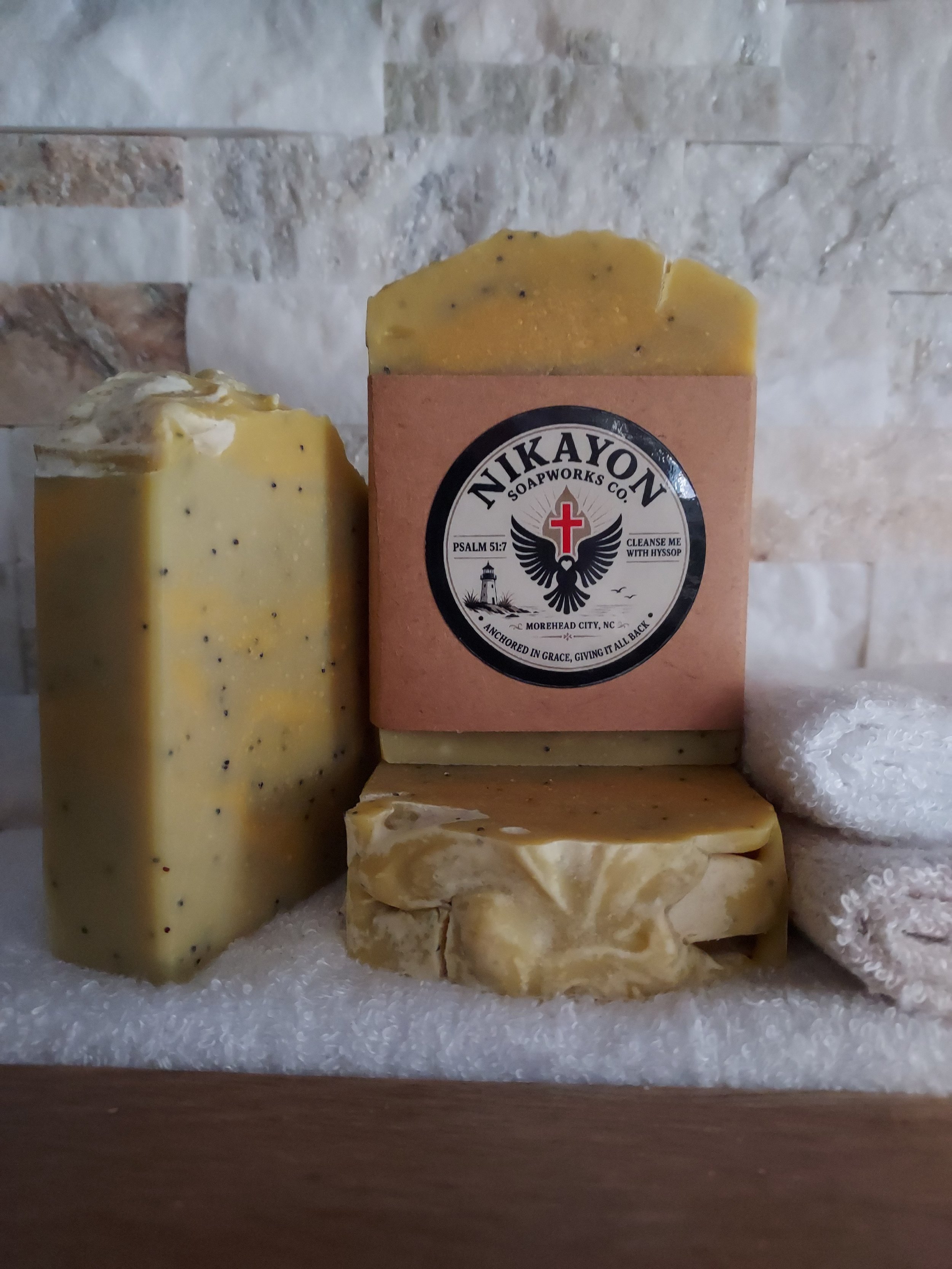
🍋 Discover the refreshing blend of earthy sage and bright, citrusy lemongrass. This invigorating herbal fragrance combines warm botanical notes with a lively citrus touch, bringing a sense of freshness and natural simplicity to your daily bathing routine.
Each bar weighs approximately 5.5 oz. Handcrafted with care, every bar is unique, with slight variations in size, shape, weight, and natural color—a natural part of handmade soap.
Ingredients: Goat Milk, Olive Oil, Coconut Oil, Palm Oil, Sodium Hydroxide, Poppyseed and Sage & Lemongrass Essential Oils.
“Earthy Sage, Bright Citrus, Beautifully Made”
📜 Psalm 51:10—God, create a clean heart for me and renew a steadfast spirit within me.
David's heart had been full of lust for Bathsheba, murderous plans for Uriah, and rebellion against God. He desired a new heart, one that was full of love for God and abhorrence of evil. Sin in his heart had brought him nothing but guilt, grief, and remorse. He wanted spiritual heart surgery that only God could perform.
Jesus cited the heart as the source of either good or evil. He explained: "The good person out of the good treasure of his heart produces good, and the evil person out of his evil treasure produces evil, for out of the abundance of the heart his mouth speaks" (Luke 6:45). Jesus also said that "everyone who looks at a woman with lustful intent has already committed adultery with her in his heart" (Matthew 5:28). David, therefore, had committed adultery with Bathsheba in his heart before the physical act of adultery took place. He needed a new heart. But he also asked the Lord to renew a right spirit within him (Psalm 51:10). He wanted the kind of spirit that would obey the Lord at all times.
Source Attribution: Scripture commentary provided by BibleRef.
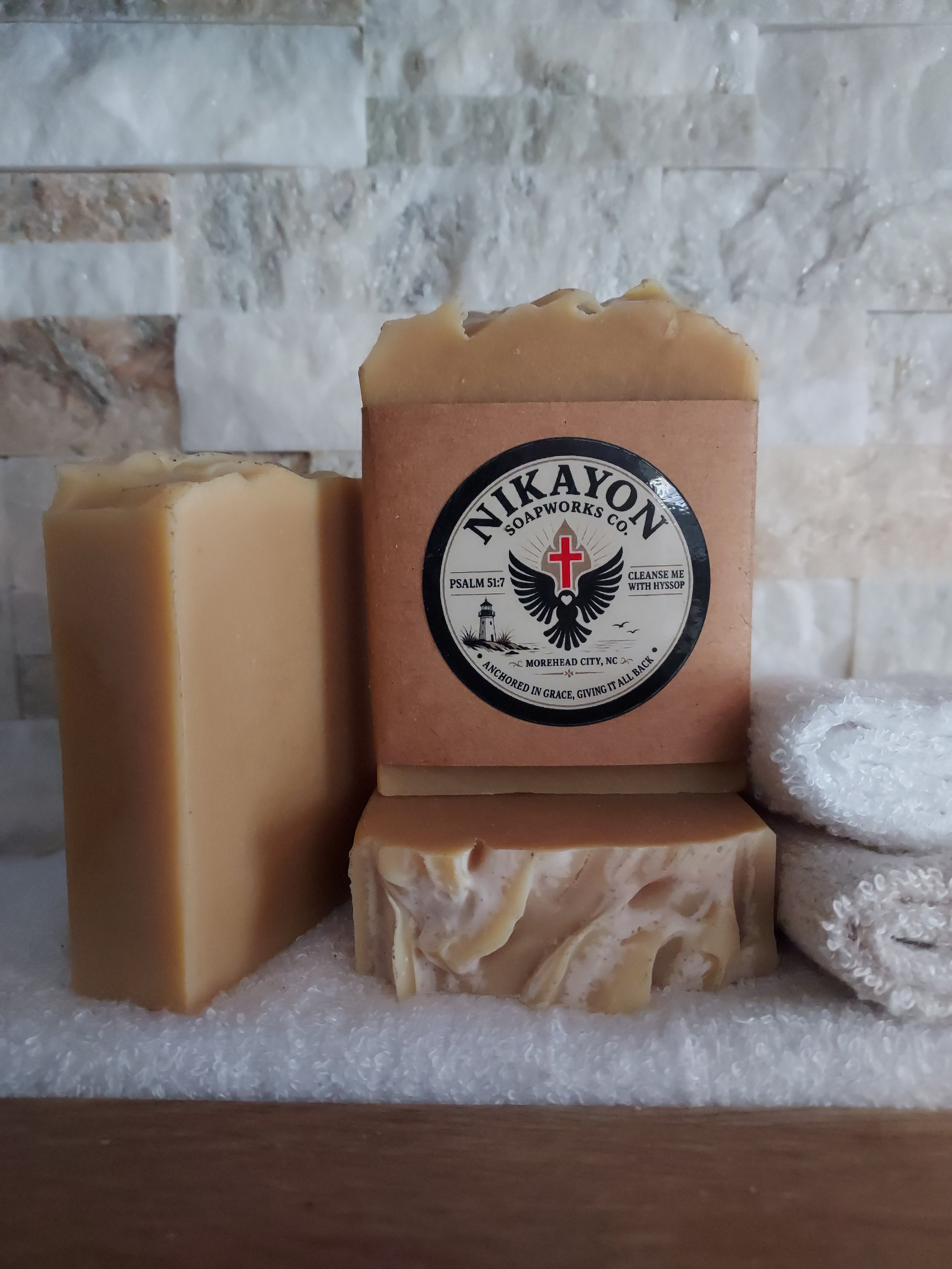
🕊️ Embrace the beauty of simplicity with our Pure & Simple Unscented Soap. Handcrafted in small batches with thoughtfully selected ingredients, this gentle, fragrance-free bar offers a naturally simple bathing experience without added fragrance.
Each bar weighs approximately 5.5 oz. Handcrafted with care, every bar is unique, with slight variations in size, shape, weight, and natural color—a natural part of handmade soap.
Ingredients: Goat Milk, Olive Oil, Coconut Oil, Palm Oil, Sodium Hydroxide.
“Naturally Simple, Faithfully Crafted”
✝️ Psalm 24:3—Who may ascend the mountain of the Lord? Who may stand in his holy place?
David asks a basic question about approaching God. He ponders who can climb the hill to worship in the tabernacle and who can enter the Lord's presence. Because God is holy and man is sinful, no one in his natural state can worship God acceptably or enter His presence (Exodus 33:20).
The Samaritan woman, with whom Jesus conversed at Jacob's well, believed worship involved a special place. She told Jesus, "Our fathers worshiped on this mountain" (John 4:20). But Jesus assured her that true worship is not about a place but about the condition of the heart. He pointed out that worshipers must worship God in spirit and in truth (John 4:24). Many religious people believe they cannot truly worship without being in church, surrounded by religious symbols. Or they feel they must repeat certain religious prayers or follow prescribed rituals. David's question, therefore, carries relevance for people today as well as for his original readers.
Source Attribution: Scripture commentary provided by BibleRef.
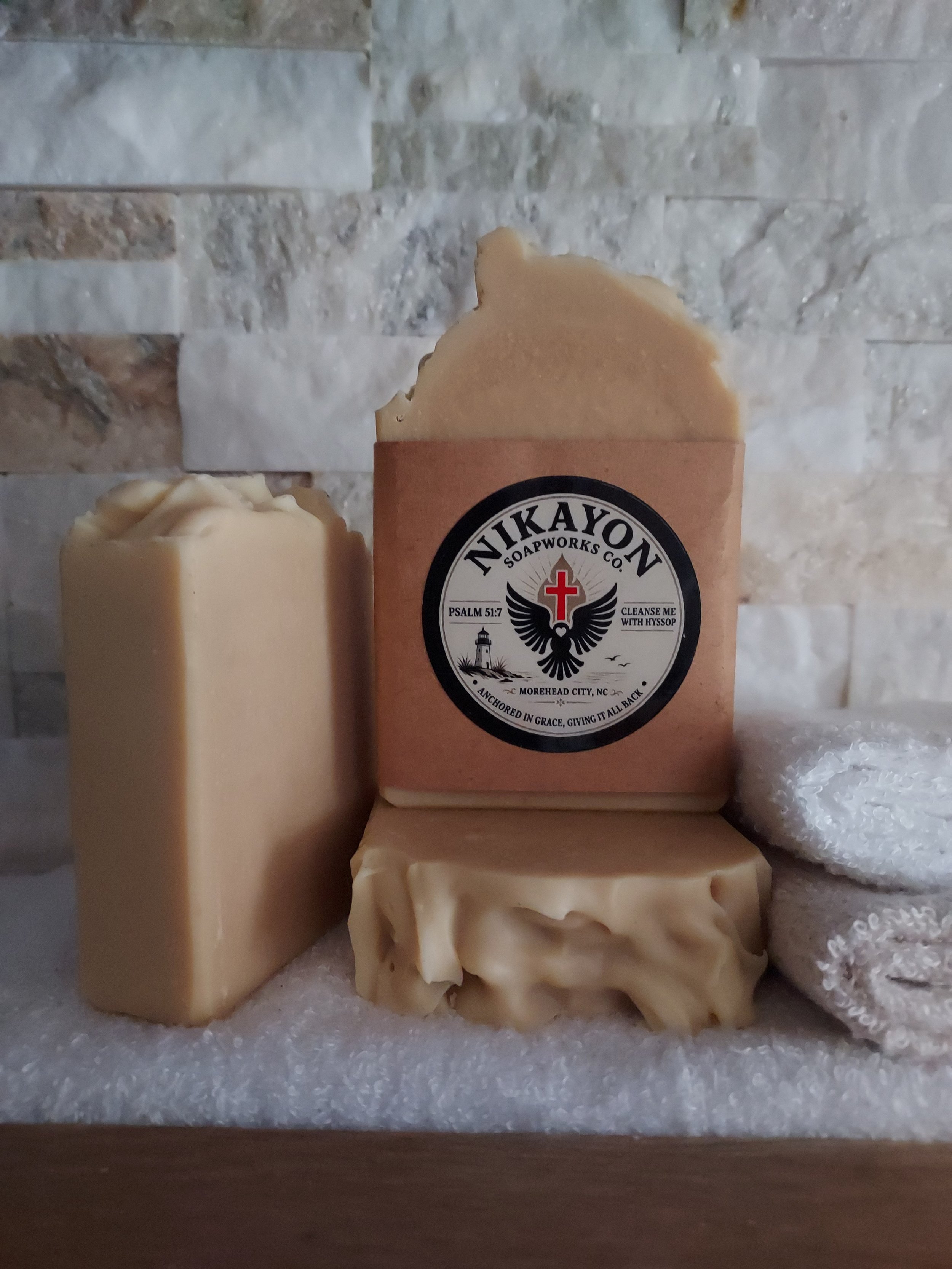
🌴 Escape to a tropical paradise with the soft, creamy sweetness of coconut. This refreshing fragrance brings to mind sun-kissed shores and gentle ocean breezes, adding a touch of tropical warmth to your daily bathing routine.
Each bar weighs approximately 5.5 oz. Handcrafted with care, every bar is unique, with slight variations in size, shape, weight, and natural color—a natural part of handmade soap.
Ingredients: Goat Milk, Olive Oil, Coconut Oil, Palm Oil, Sodium Hydroxide and Coconut Essential Oil.
“A Touch of Paradise, Rooted in Faith”
✝️ John 4:13-14—Jesus said, everyone who drinks from this water will get thirsty again. But whoever drinks from the water that I will give him will never get thirsty again. In fact, the water I will give him will become a well of water springing up in him for eternal life.
Here Jesus begins to unpack the concept of "living water." Listeners commonly misinterpreted Jesus' parables or teachings in a purely physical way. In some cases, those hearing Jesus sensed He wasn't being literal but could not see the point of the analogy (John 3:3–4). In others, they mistook the intended lesson (John 2:19–21). Jesus starts by explaining the difference between the literal well water, meaning the physical world, and living water, meaning the Holy Spirit. This is a concept Jesus will return to, in a much more public way, later in this gospel (John 7:38–39).
No matter how hard we try, earthly things will never satisfy the natural human longing for God. Writers from Augustine to C. S. Lewis have noted that human nature finds itself ultimately dissatisfied with material things. We seek all kinds of earthly "water" in attempts to quench our spiritual thirst. Only a healed relationship with God, through salvation in Christ, can solve that problem.
Jesus' comments here present important facts about the nature of salvation. To get water from a well, a person must lower a bucket, then haul up the full container. This needs to be repeated as often as required to get more water. The water Jesus promises will become a permanent spring within the person.
In direct terms, Jesus is pointing out that salvation is neither obtained nor kept through works. In fact, Jesus is contrasting the nature of salvation with the nature of human efforts. One is temporary and requires work. The other is eternal and is obtained only as a gift. Twice, in fact, Jesus refers to this "living water" as something He will give. This is not something a person could draw for themselves, even if they wanted to.
Many of the things we pursue on earth are an attempt to fill the natural human longing for God. Augustine famously said to God, "You have formed us for Yourself, and our hearts are restless till they find rest in You." This is part of what Jesus means by earthly water being only a temporary solution. Material things can never take the place of a relationship. Our ultimate purpose as created beings is to know, serve, and worship our Creator.
Looking at the Samaritan woman's history, it seems she was looking for comfort or security in relationships (John 4:17–18). Sadly, that quest led her into an immoral and unsatisfying life.
Source Attribution: Scripture commentary provided by BibleRef.
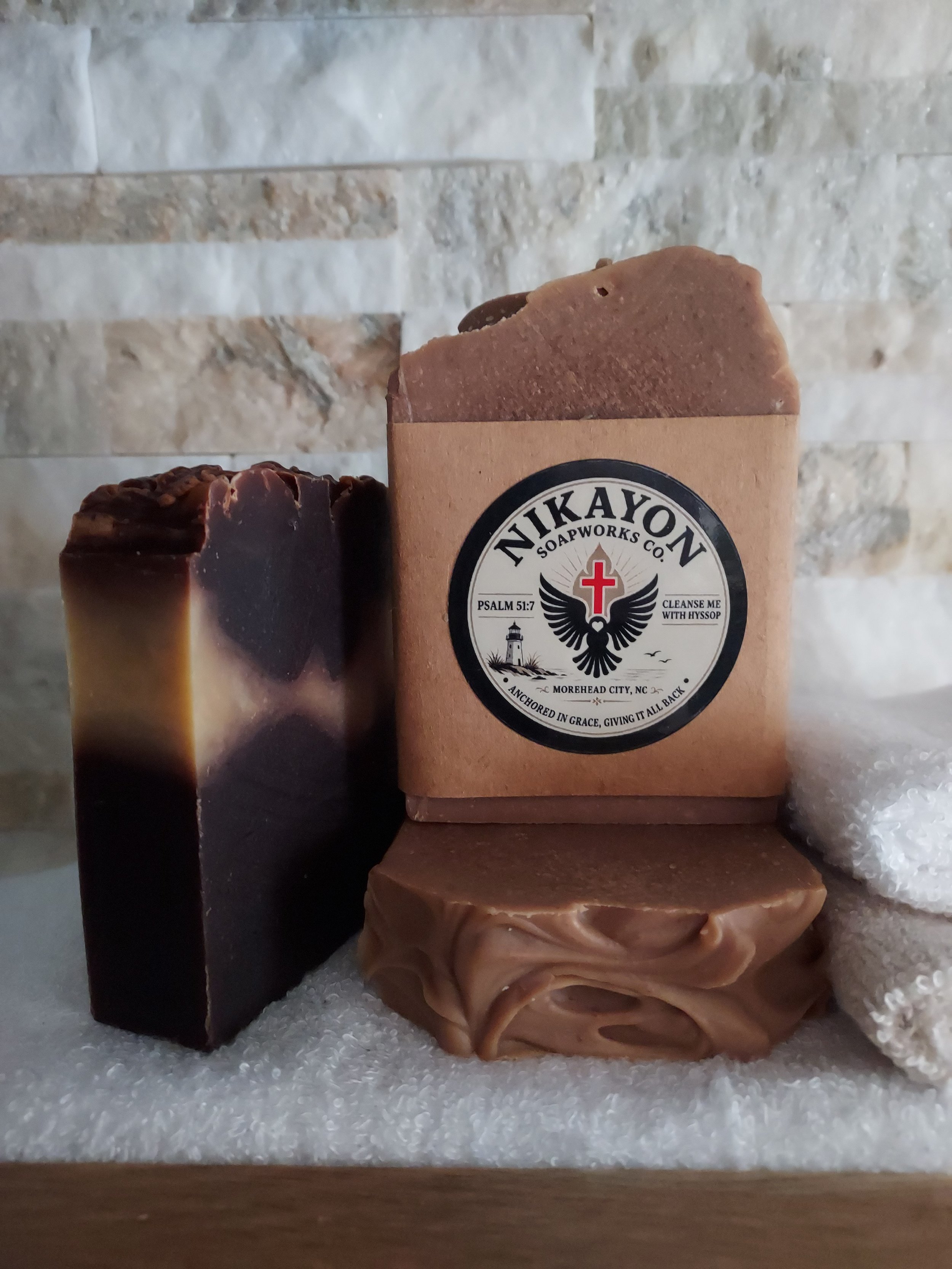
🌼 Wrap yourself in the warm, comforting sweetness of vanilla. This timeless fragrance blends soft, creamy notes with a hint of sweetness, creating a cozy and inviting bathing experience.
Each bar weighs approximately 5.5 oz. Handcrafted with care, every bar is unique, with slight variations in size, shape, weight, and natural color—a natural part of handmade soap.
Ingredients: Goat Milk, Olive Oil, Coconut Oil, Palm Oil, Sodium Hydroxide and Vanilla Essential Oil.
“Sweet Comfort, Rooted in His Promises”
📖 2 Corinthians 2:15— For to God we are the fragrance of Christ among those who are being saved and among those who are perishing.
Scripture has described the Christian life using an unusual metaphor in the previous verse. Paul pictured believers as captives of a Roman general returning in victory from war. In that era, generals would parade the conquered enemy through the streets while burning incense in celebration of the victory. This made the procession a combination of sight, sound, and smell, all of which proclaimed the victory of that commander.
Paul wrote that God parades Christians in this way, except that the spreading fragrance is not incense. It is the "smell" of the knowledge of God. Now Paul gets more specific: Christians are the aroma of Christ in the world. In a very real sense, believers make Christ present on earth, as He is in them. Everywhere they travel, they symbolically "give off the smell" of the Savior to fellow Christians and unbelievers alike. It's an aroma that is received differently depending on one's eternal status. This attitude greatly differs between "those who are being saved" and forgiven for sin in Christ, versus "those who are perishing" in sin without forgiveness because they lack faith in Christ.
Source Attribution: Scripture commentary provided by BibleRef.
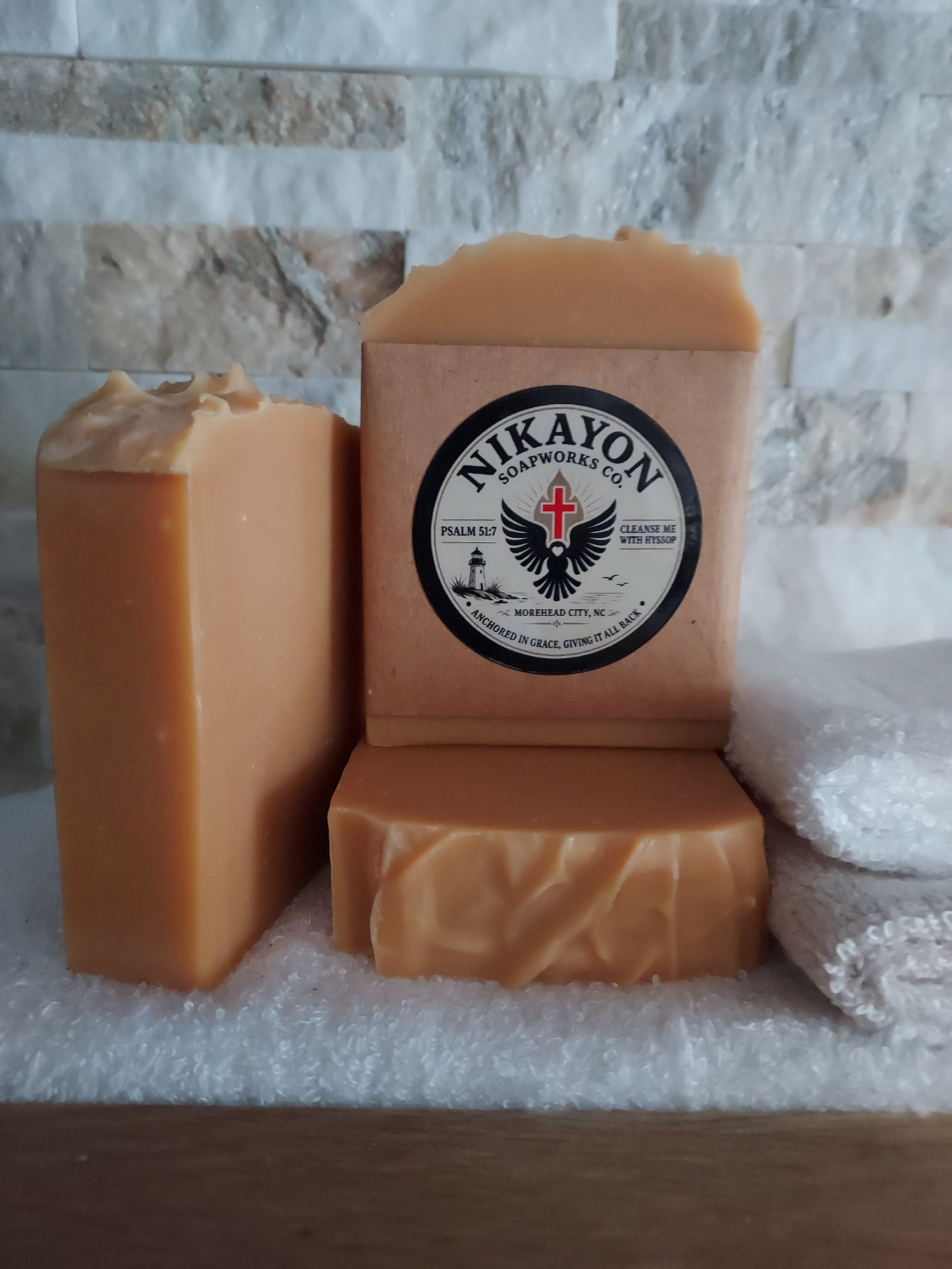
🍊 Awaken your senses with the bright, uplifting fragrance of fresh orange. This cheerful citrus scent brings a burst of freshness and warmth to your daily bathing routine, inspired by the promise of renewal and the hope of new beginnings.
Each bar weighs approximately 5.5 oz. Handcrafted with care, every bar is unique, with slight variations in size, shape, weight, and natural color—a natural part of handmade soap.
Ingredients: Goat Milk, Olive Oil, Coconut Oil, Palm Oil, Sodium Hydroxide and Orange Essential Oil.
“Fresh Beginnings, Renewed by Grace”
✝️ Galatians 5:22–23—But the fruit of the Spirit is love, joy, peace, patience, kindness, goodness, faithfulness, gentleness, and self-control. The law is not against such things.
What should the lives of those who are free in Christ look like? In other words, how should Christians live if we are not under the law of Moses? Paul has answered that question in two ways so far. First, Christians must not squander our freedom in Christ, which is freedom from under the law, by serving only ourselves (Galatians 5:13–15). That leads to a laundry list of sinful lifestyles. Instead, Paul has written, those in Christ should allow God's Spirit to lead them into powerful service to others motivated by love (Galatians 5:16–21).
Now Paul begins to offer a new list. This describes what those in Christ should expect to see flowing from their lives when they let the Holy Spirit lead them. Paul calls this the "fruit of the Spirit." It's helpful to understand this is meant to imply a single fruit—the Greek term is singular. This is not a list of nine separate fruits, but nine characteristics of the (single) fruit of the Spirit. In Christ, we should expect to see all of these characteristics showing up together as we give God's Spirit control. They come in no particular order, or rank, or schedule.
Paul begins with love, from the Greek term agapē. This is famously described as "selfless love," or an attitude that considers other people more than ourselves, without expecting anything in return. God's Spirit in us produces God's unconditional love in us for Him and for others (1 Corinthians 13:4–13).
Joy is translated from the Greek chara, which does not necessarily imply happiness. "Joy," in a biblical sense, is best described as an inner confidence. This allows us to declare to our soul that all is well with us, now and forever, because of our place in Christ. Supernatural peace comes as a result of trusting God and is not dependent on our circumstances (Philippians 4:4–9).
Peace is the concept of restful, assured stillness. This is different from something frozen or fearful. It's not the same as being restrained, nor does it mean a lack of motivation. Biblical "peace" involves emotions such as assurance, and an overall sense of spiritual calm.
Patience is the ability, in the Spirit, to wait on God's perfect timing even when our personal agenda seems to be failing. Translated from the term makrothymia, "patience" includes controlling our response to circumstances. This contrasts with the error Paul gave in verse 20, translated "fits of anger," from the related word thymoi. Scripture uses the term "patience" to mean an ability to endure hardship—to "weather the storm."
Kindness may be simple, but it is not always easy. The original term, chrēstotēs, includes concepts of being good and gentle. In the Spirit, we can be kind to anyone, even those who are challenging and offensive.
To compare a life devoted to serving self with a life lived in the power of God's Spirit, Paul has made two lists. The first list (Galatians 5:19–21) showed the sinful lifestyles resulting from a worldly "me first" attitude. Such lifestyles are completely natural for human beings, but they are not beneficial. Paul's second is what grows naturally from those supernaturally led by the Spirit of God. Only those who are God's, by faith in Christ, have the opportunity to live this way. Those who do are marked by the characteristics of the "fruit of the Spirit," as listed beginning in the previous verse. Paul concludes his list of those characteristics here with two more: gentleness and self-control.
Gentleness is not to be misunderstood as weakness or a willingness to let others always have their way. Instead, this is the supernatural ability in the Spirit's power not to demand control or be extreme in our responses. Rather, we can submit to God's control over whatever situation we are in. The Greek word used here is prautēs, which implies someone humble and tranquil, not frail or fragile.
The final characteristic of the fruit of the Spirit is self-control, from the original word enkrateia. This is an important inclusion, since it helps prove that God does not intend His Spirit to overcome our will and possess us, turning us into robotic servants. In the context of our relationship with Christ, self-control is the supernatural ability to submit our will to His leading in our lives. A Spirit-controlled person is always in full control of his or her own mind, body, and words. This contrasts with Paul's condemnation of sins such as sensuality and impurity, from verses 19 and 20.
Source Attribution: Scripture commentary provided by BibleRef.
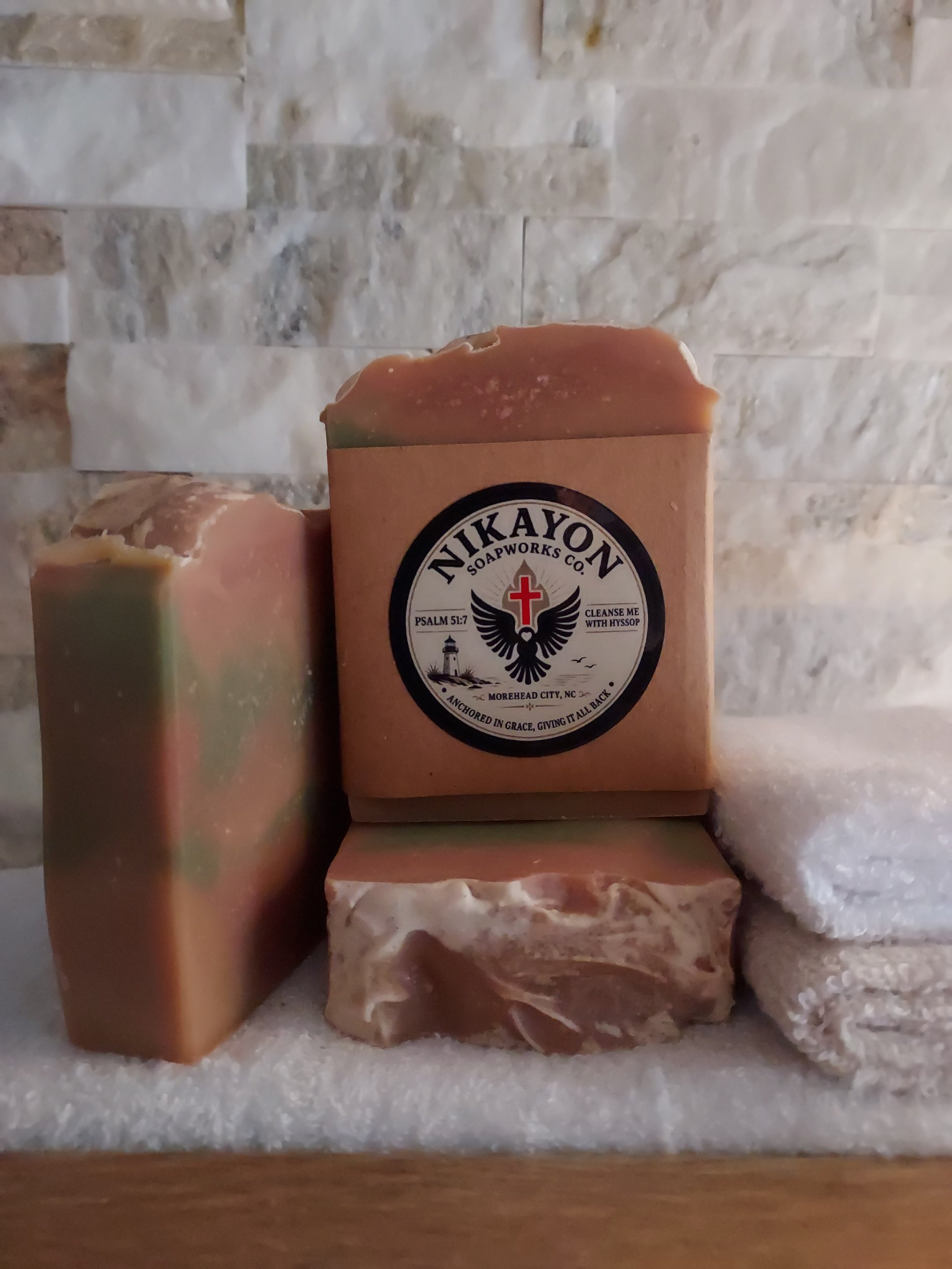
🍒 Delight in the vibrant sweetness of cranberry and the rich, fruity aroma of pomegranate. This refreshing fragrance blends bright berry notes with a luscious, juicy finish, bringing a touch of warmth and joyful freshness to your daily bathing routine.
Each bar weighs approximately 5.5 oz. Handcrafted with care, every bar is unique, with slight variations in size, shape, weight, and natural color—a natural part of handmade soap.
Ingredients: Goat Milk, Olive Oil, Coconut Oil, Palm Oil, Sodium Hydroxide and Cranberry Pomegranate Essential Oils.
“A Burst of Berries, A Blessing of Grace”
✝️ Psalm 34:8—Taste and see that the Lord is good. How happy is the person who takes refuge in him.
Once again, the book of Psalms provides a poetic phrase used often in Christian literature and songs. The expression "taste and see that the LORD is good" combines several ideas. To "taste" means something more than a fleeting relationship. It means to feed on the Lord—to accept His truth deep into one's self (John 6:53)—which involves reading the written Word of God voraciously and mulling over it as part of our discipleship. To truly know God, we need to absorb His message as if we were eating it (Revelation 10:2–10).
When the Lord commissioned Joshua to lead the Hebrews into Canaan, He instructed him to meditate day and night on His Word (Joshua 1:8). Everyone who seriously studies and applies God's Word learns firsthand that the Lord is good, and he also finds the Lord is an available and reliable stronghold. Further, the person who tastes and sees that the Lord is good finds blessing: true happiness. Jesus promised: "Blessed are those who hunger and thirst for righteousness, for they shall be satisfied" (Matthew 5:6).
Source Attribution: Scripture commentary provided by BibleRef.
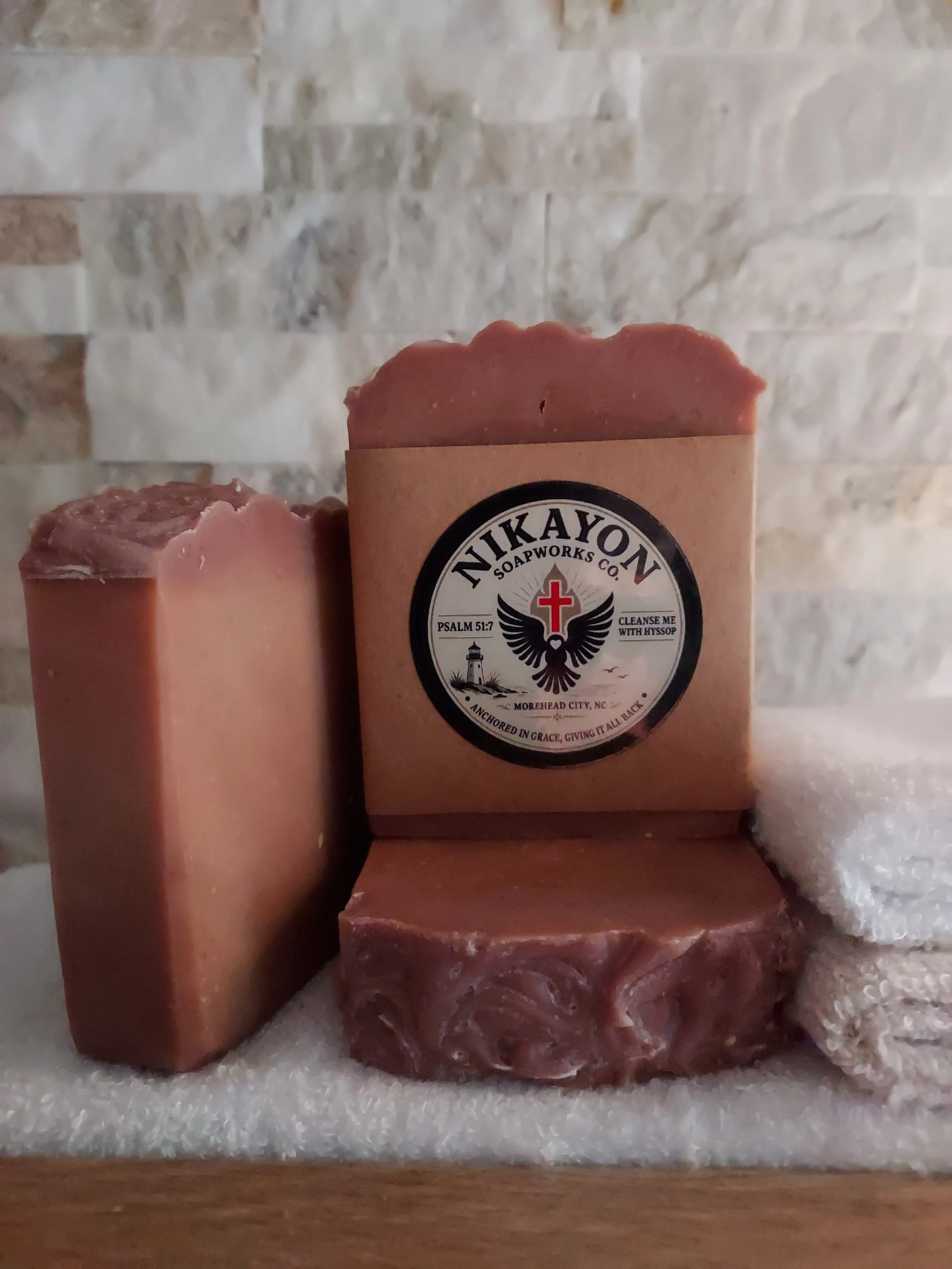
🌸 Delight in the graceful beauty of radiant orchid, with its elegant floral fragrance and soft, captivating sweetness. This lovely scent brings a touch of sophistication and floral freshness to your daily bathing routine.
Each bar weighs approximately 5.5 oz. Handcrafted with care, every bar is unique, with slight variations in size, shape, weight, and natural color—a natural part of handmade soap.
Ingredients: Goat Milk, Olive Oil, Coconut Oil, Palm Oil, Sodium Hydroxide and Radiant Orchid Essential Oils.
“Rooted in Faith, Blossoming in Beauty”
📜 Ephesians 3:11— This is according to his eternal purpose accomplished in Christ Jesus our Lord.
This mystery which God has revealed regards Jews and Gentiles as one (Ephesians 3:1–10). Though not fully explained until now, this is not a new idea God dreamed up. He did not invent this plan at the last minute, but rather knew about it in eternity past. Some Scriptures imply God's intentions before "the foundations of the earth" (Proverbs 3:19; Job 38:4; Isaiah 48:13) Here, Paul notes that this it was part of God's eternal purpose. God has always known His plan and revealed it exactly as prepared. God's plans are not only known, but He "works all things according to the counsel of His will" (Ephesians 1:11).
This plan was "realized in Christ Jesus our Lord." In other words, the mystery was revealed through Jesus. He is the Messiah and fulfillment of past prophecies concerning the Coming One, God with us (Emmanuel), and the Suffering Servant (Isaiah 53). It is through Jesus that salvation has been provided equally for both Jew and Gentile, not through the law, but through faith (Ephesians 2:8–9).
Source Attribution: Scripture commentary provided by BibleRef.
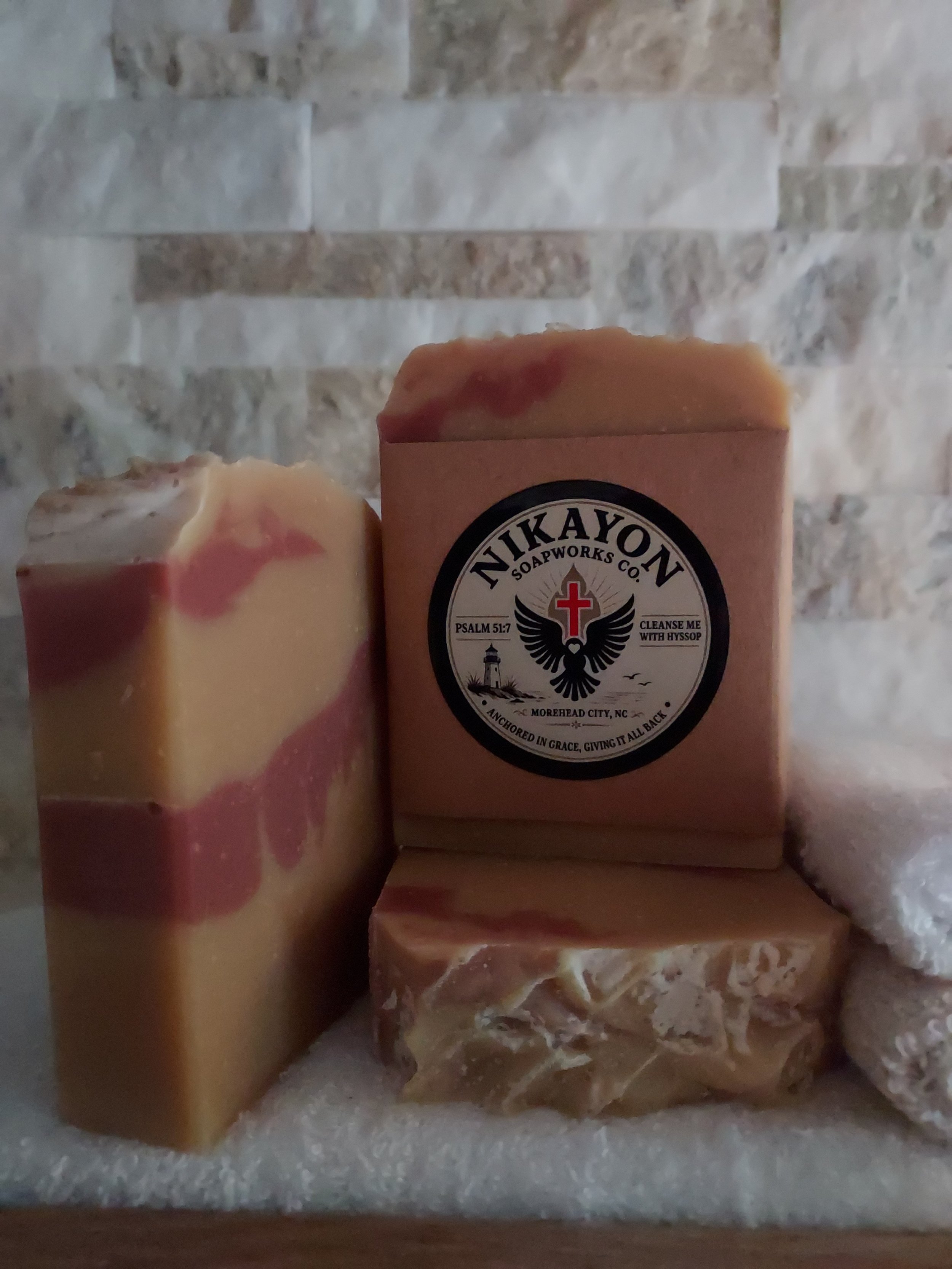
✨ Discover the warm, rich aroma of sandalwood, with its smooth, woody notes and timeless earthy character. This grounding fragrance brings a sense of warmth and quiet simplicity to your daily bathing routine.
Each bar weighs approximately 5.5 oz. Handcrafted with care, every bar is unique, with slight variations in size, shape, weight, and natural color—a natural part of handmade soap.
Ingredients: Goat Milk, Olive Oil, Coconut Oil, Palm Oil, Sodium Hydroxide and Sandalwood Essential Oils.
“Grounded in Nature, Anchored in Grace”
✝️ Psalm 46:10—Be still and know that I am God: I will be exalted among the heathen, I will be exalted in the earth.
This often-quoted verse comes in a specific context: God's omnipotent power to protect the nation of Israel from the hostile forces which attack her (Psalm 46:1–7). The phrase "be still" uses a Hebrew term which can be rendered as "relax," "let go," or "stop." It implies an act of surrender—a release of striving and hostility. Prior verses pointed out that attempting to fight against God is a losing proposition (Psalm 46:8–9). Those who rage against God (Psalm 2:1) would be better off letting go of frantic anger and accepting His truth instead.
In literal terms, this verse does not mean to "sit quietly and listen for God." That interpretation is not entirely flawed, of course. Where God's enemies need to "be still" by ending their tantrums against Him, God's people can "be still" by faithfully trusting God to be their source of strength (Exodus 14:13).
That trust and submission is key to what it means to "know that I am God." One might imagine a strong, protective parent telling a child, "don't be afraid, keep in mind how I've kept you safe in the past."
Scriptural references to "the nations" often mean the Gentile world: nations other than Israel. That same context also implies a message meant to be heard and understood by the entire world. This psalm calls upon all people to stop squabbling and know that the Lord is God. Psalm 2:10–12 issues similar counsel. The Lord advises the nations to be wise, to be warned, to serve the Lord with fear, to rejoice with trembling, and to kiss the Son. In other words, the Lord summons the nations to repent, throw down their weapons of warfare, and come to friendly terms with Him.
One way or another, God will be properly honored by all people and in all places on earth (Isaiah 45:23; Romans 14:11). Someday, at the name of Jesus, every knee will bow, and every tongue will confess Christ as Lord, giving glory to God the Father (Philippians 2:10–11).
Source Attribution: Scripture commentary provided by BibleRef.
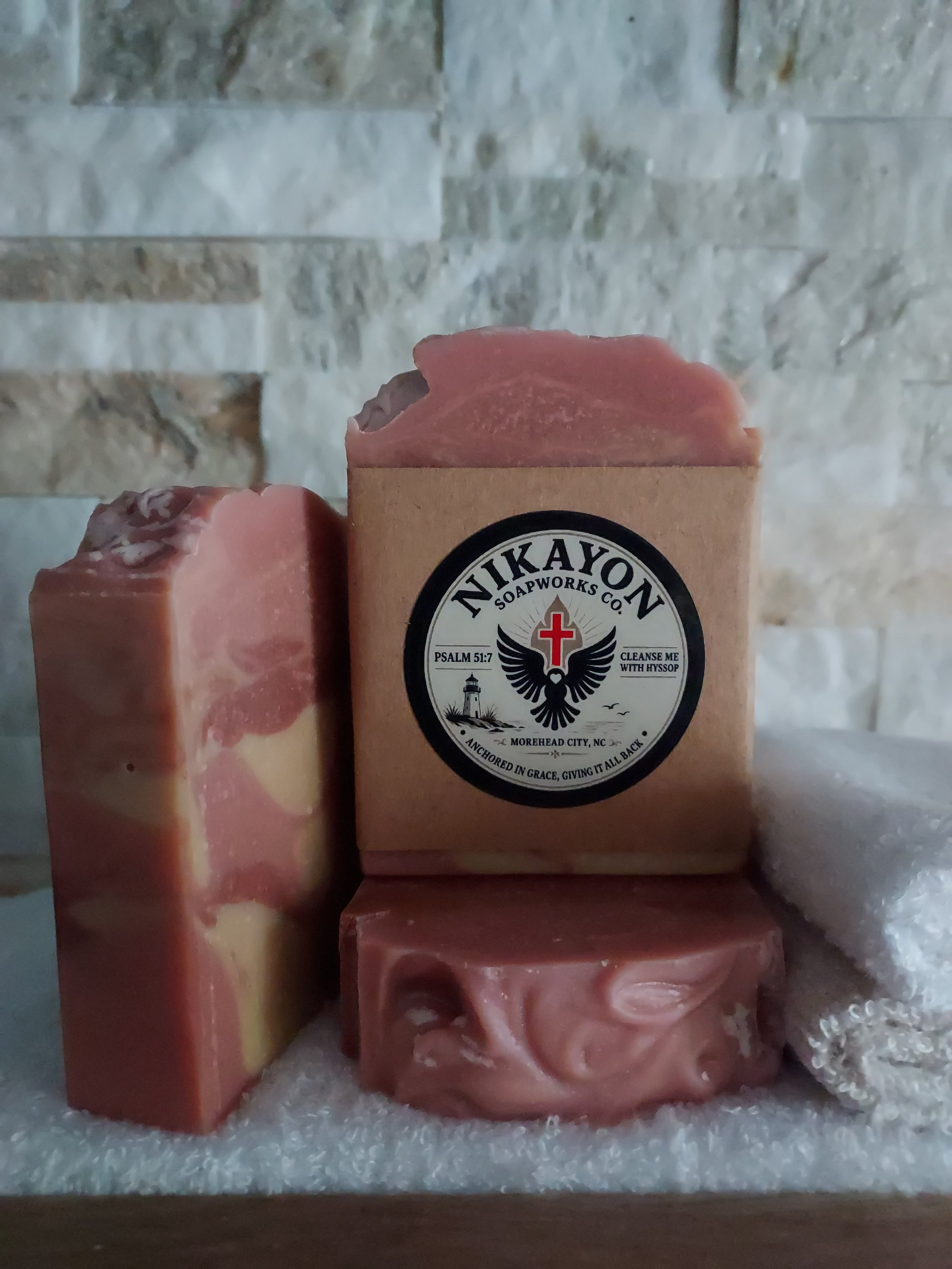
🌹 Discover the delicate beauty of rosehip blended with the soft, enchanting fragrance of jasmine. This elegant floral scent combines gentle sweetness with a fresh botanical touch, bringing a little beauty and tranquility to your daily bathing routine.
Each bar weighs approximately 5.5 oz. Handcrafted with care, every bar is unique, with slight variations in size, shape, weight, and natural color—a natural part of handmade soap.
Ingredients: Goat Milk, Olive Oil, Coconut Oil, Palm Oil, Sodium Hydroxide and Rosehip Jasmine Essential Oils.
“Delicate Blooms, Abundant Grace”
✝️ 2 Corinthians 2:15—For to God we are the fragrance of Christ among those who are being saved and among those who are perishing.
Scripture has described the Christian life using an unusual metaphor in the previous verse. Paul pictured believers as captives of a Roman general returning in victory from war. In that era, generals would parade the conquered enemy through the streets while burning incense in celebration of the victory. This made the procession a combination of sight, sound, and smell, all of which proclaimed the victory of that commander.
Paul wrote that God parades Christians in this way, except that the spreading fragrance is not incense. It is the "smell" of the knowledge of God. Now Paul gets more specific: Christians are the aroma of Christ in the world. In a very real sense, believers make Christ present on earth, as He is in them. Everywhere they travel, they symbolically "give off the smell" of the Savior to fellow Christians and unbelievers alike. It's an aroma that is received differently depending on one's eternal status. This attitude greatly differs between "those who are being saved" and forgiven for sin in Christ, versus "those who are perishing" in sin without forgiveness because they lack faith in Christ.
Source Attribution: Scripture commentary provided by BibleRef.
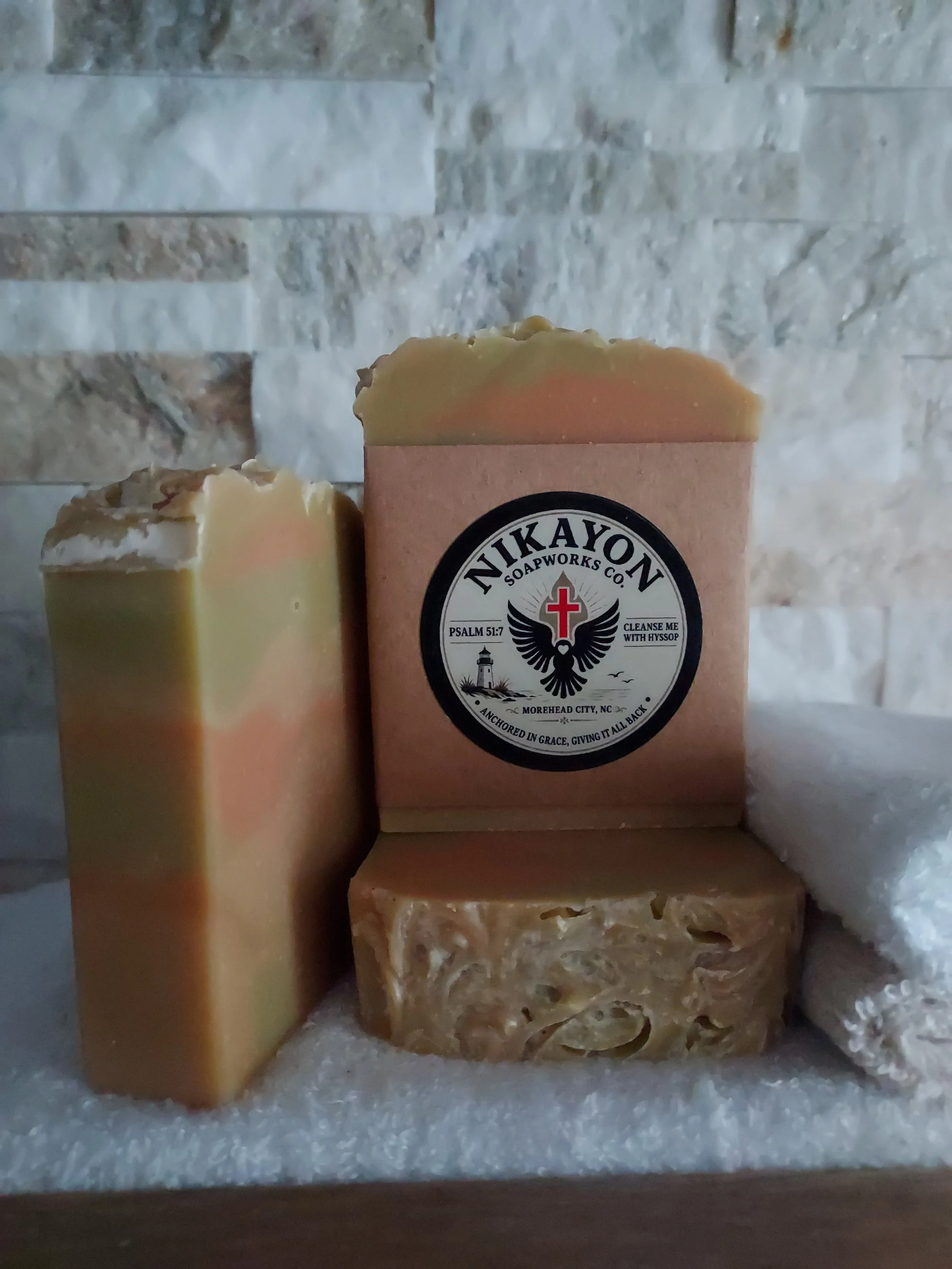
🍃 Step into the peaceful beauty of the forest with the earthy, woodsy fragrance of woodland botanicals. Inspired by towering trees, fresh greenery, and the quiet stillness of nature, this grounding scent brings a touch of the outdoors to your daily bathing routine.
Each bar weighs approximately 5.5 oz. Handcrafted with care, every bar is unique, with slight variations in size, shape, weight, and natural color—a natural part of handmade soap.
Ingredients: Goat Milk, Olive Oil, Coconut Oil, Palm Oil, Sodium Hydroxide and Woodland Essential Oils.
“A Breath of the Forest, A Touch of Grace”
✝️ 2 Corinthians 5:10—For we must all appear before the judgment seat of Christ, so that each may be repaid for what he has done in the body, whether good or evil.
The judgment seat of Christ is something exclusively for believers, as Christ's evaluation of our works on earth. This refers to an assessment of what each saved, heaven-bound Christian has done "in the body" since coming to faith in Christ. How has he or she used this life in Christ? What have they done, for good or for evil? Paul wrote in Romans 14:12 that each believer will "give an account of himself to God."
How will Christ respond? Every good action will be rewarded. Christians will receive those efforts "back from the Lord" (Ephesians 6:8). The works of those who have lived only for themselves, however, will be "burned up" or shown to be worthless. "If anyone's work is burned up, he will suffer loss, though he himself will be saved, but only as through fire" (1 Corinthians 3:15).
Paul is motivated by the awareness of this coming judgment, and he wants his readers to be motivated by it, as well. God's grace to us in forgiving sin does not mean He's careless about how Christians live our earthly lives. We will stand before Him and be held to account for our choices. That accountability does not affect our eternal destiny. It declares our time as spent well or foolishly, courageously or cowardly, in faith or in spiritual blindness and selfishness. The consequences of reward or reprimand in that moment will be genuinely pleasurable and/or painful, based on the choices we have made in our bodies on this side of eternity.
Source Attribution: Scripture commentary provided by BibleRef.
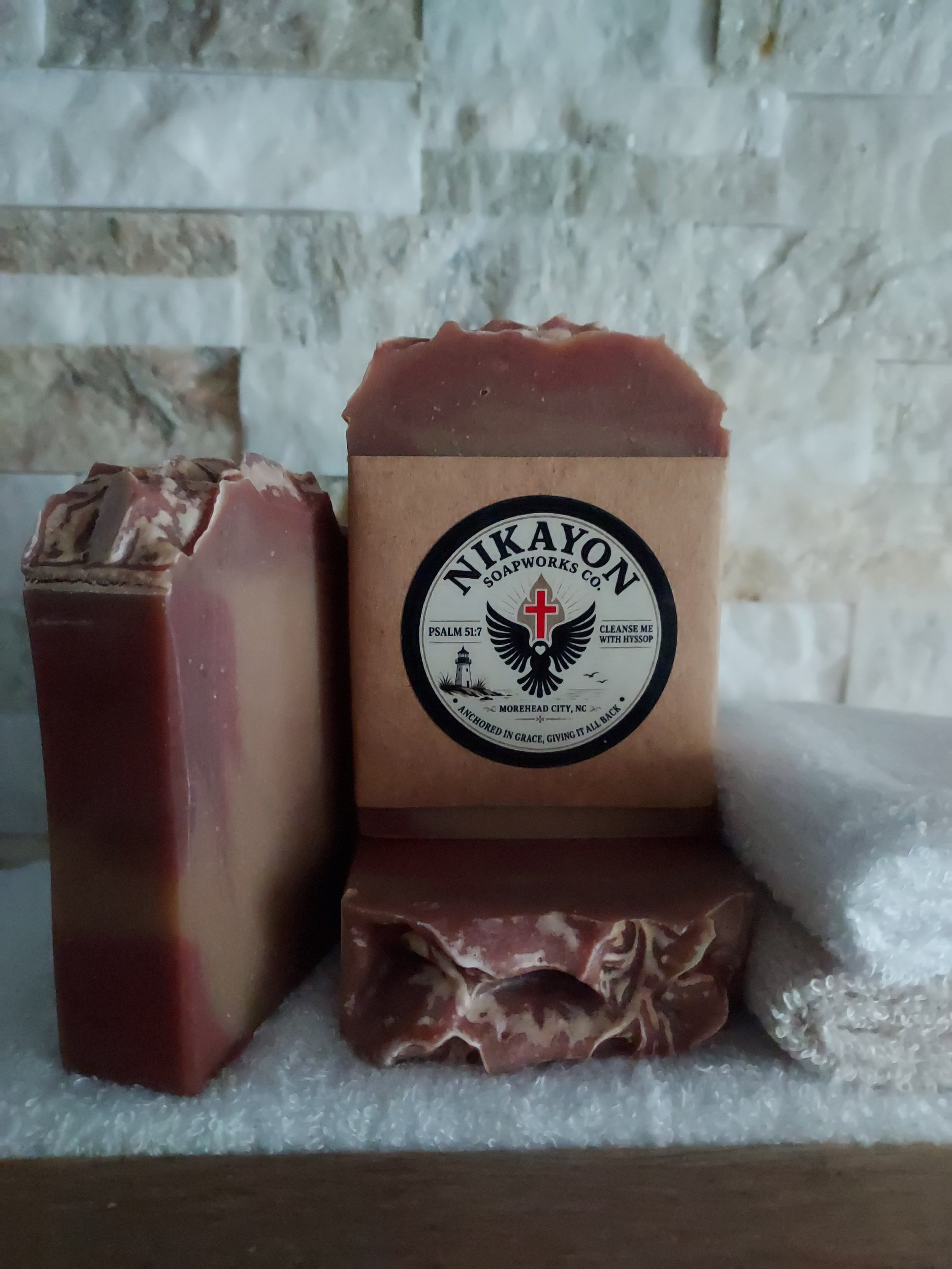
🌿 Surround yourself with the soft, comforting fragrance of cashmere, featuring warm, delicate notes that evoke a sense of peaceful elegance and cozy warmth. This beautifully gentle scent brings a touch of comfort and quiet luxury to your daily bathing routine.
Each bar weighs approximately 5.5 oz. Handcrafted with care, every bar is unique, with slight variations in size, shape, weight, and natural color—a natural part of handmade soap.
Ingredients: Goat Milk, Olive Oil, Coconut Oil, Palm Oil, Sodium Hydroxide and Cashmere Essential Oils.
“Wrapped in Comfort, Anchored in Grace”
📖 Psalm 23:2—He lets me lie down in green pastures; he leads me beside quiet waters.
David writes that the Lord provides rest in green pastures and guides him to still waters. Shepherds in biblical times did not "drive" their sheep. Instead of pushing the herd from behind, they walked ahead of the flock, which followed. The land of Israel did not have plentiful, verdant pastureland except in the rainy season. Shepherds needed to guide their sheep to green pasture, otherwise the sheep would go hungry.
Further, sheep will not drink from a rushing stream. Nor will they instinctively seek out clean water—they are prone to drinking whatever is nearby. Therefore, a good shepherd leads his sheep to calm, clean water.
As a good shepherd, the Lord guided David to green pasture; that is, He provided well for David, giving him abundance, rest, and peace. Jesus, the Good Shepherd, provides all of this care for His followers. He gives us rest (Matthew 11:28), abundance (Matthew 6:33; John 10:10; Ephesians 1:3; Philippians 4:19), and peace (John 14:27).
Just as a shepherd in Bible times knew his sheep by name, so our Good Shepherd knows us personally and calls us by name (John 10:3). We should be quick to heed His call and follow Him!
Source Attribution: Scripture commentary provided by BibleRef.
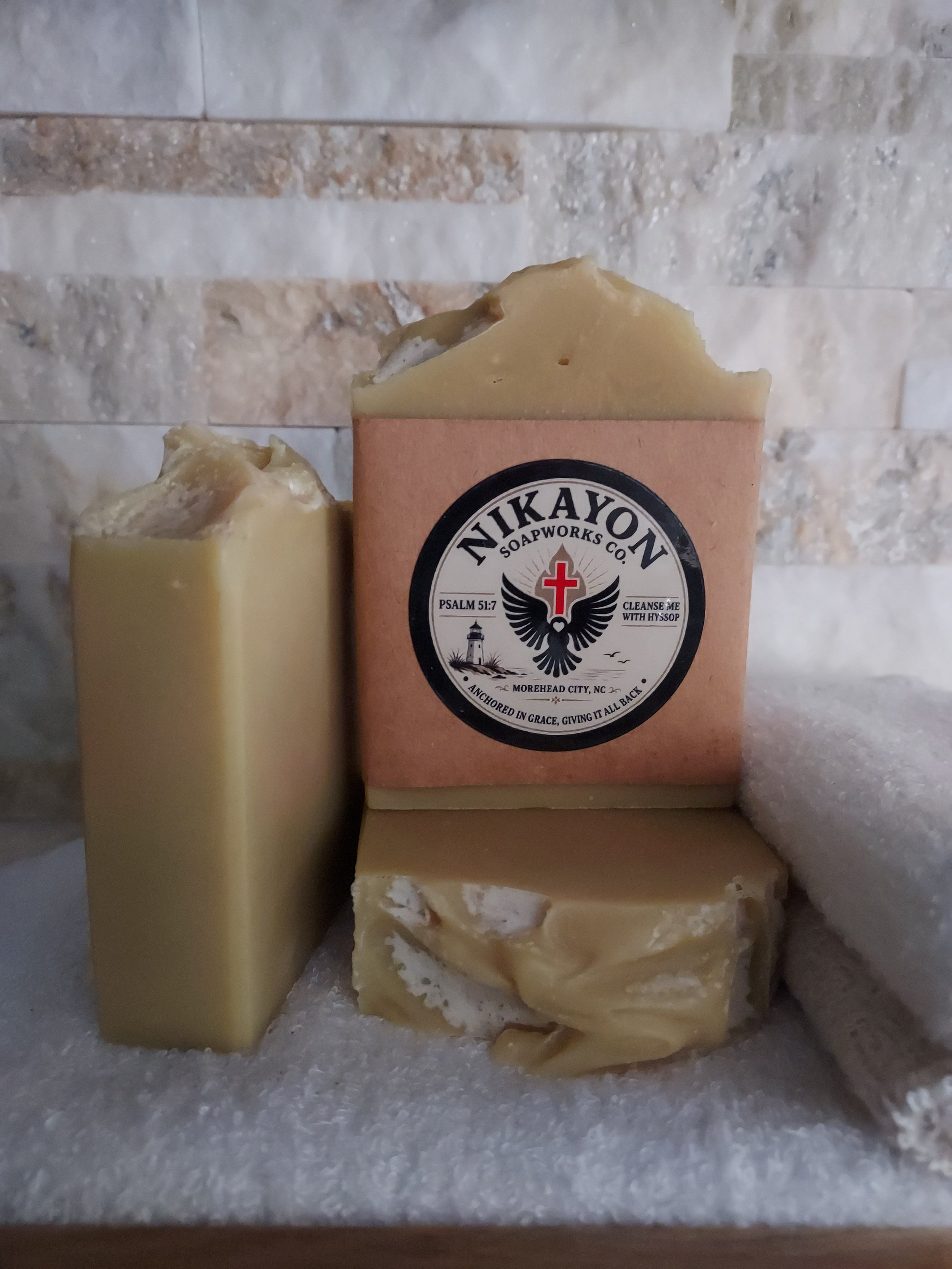
🌲 Bring the beauty of a winter forest into your daily routine. Frosted Fir captures the crisp, refreshing scent of evergreen trees with cool woodland notes and a touch of winter freshness. Clean, invigorating, and reminiscent of a peaceful forest dusted with freshly fallen snow.
Each bar weighs approximately 5.5 oz. Handcrafted with care, every bar is unique, with slight variations in size, shape, weight, and natural color—a natural part of handmade soap.
Ingredients: Goat Milk, Olive Oil, Coconut Oil, Palm Oil, Sodium Hydroxide and Frosted Fir Essential Oil.
“Evergreen Elegance, Heaven-Sent Freshness”
✝️ 2 Samuel 6:5 —David and the whole house of Israel were dancing before the Lord with all kinds of fir wood instruments, lyres, harps, tambourines, sistrums, and cymbals.
During Saul's reign, the ark of the covenant travelled wherever Saul wanted it (1 Samuel 14:18). After capturing Jerusalem (2 Samuel 5:6–10), David resolves to give the ark a permanent home there. He consults the people, his military leaders, and God (1 Chronicles 13:1–4). His decision is to bring the ark from Baale-judah to a special tabernacle he's built in Jerusalem (2 Samuel 6:1–4). For David and the people, this journey becomes an opportunity to worship and praise God with all their strength.
David clearly understands that God's presence rests on the ark of the covenant in a unique way. Being near the Lord stirs him to worship through music. This response reflects both God's desire for His people and David's own nature as a musician and songwriter.
This worship is not the calm, somber music we sometimes associate with church. David and the procession rejoice loudly before the Lord, playing instruments brought specifically for the occasion. They use lyres and harps—handheld stringed instruments—along with tambourines, cymbals, and castanets. This verse contains the only biblical use of the word translated "castanet" or "sistrum," likely a type of shaker or rattle. As they march toward Jerusalem, they worship with all their might, confident that their God is present with them and supports them in this moment.
David may have written Psalm 68 for this celebration:
our procession, God, has come into view,
the procession of my God and King into the sanctuary.
In front are the singers, after them the musicians;
with them are the young women playing the timbrels.
Because of your temple at Jerusalem
kings will bring you gifts.
--Psalm 68:24–25, 29, ESV
Source Attribution: Scripture commentary provided by BibleRef.
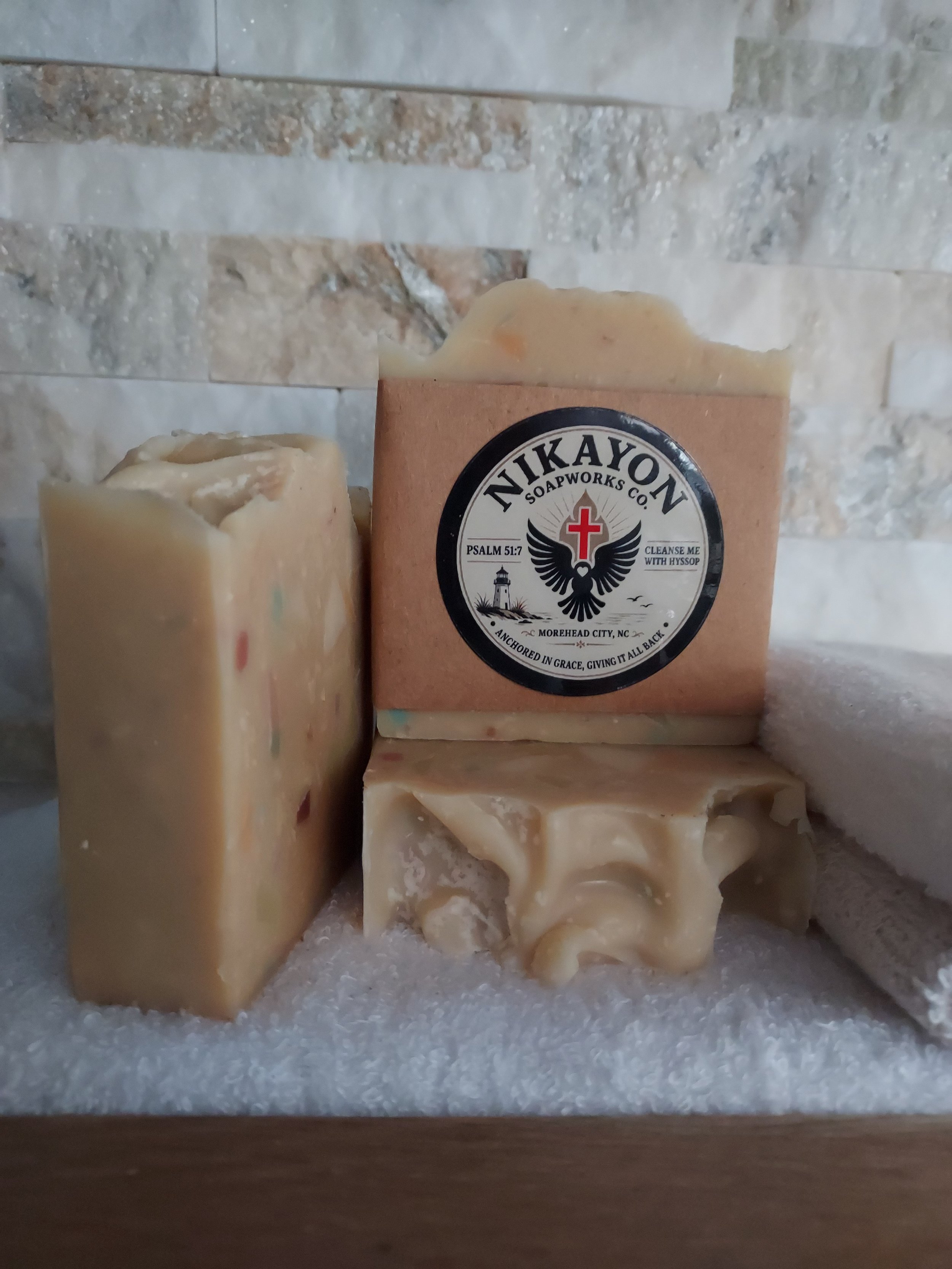
🐚 Our signature Confetti Goat Milk Soap, a refreshing blend inspired by sunlit ocean shores, gentle sea breezes, and carefree days along the coast. Bright, uplifting, and delightfully fresh, this scent brings to mind sparkling waves, sandy beaches, and the beauty of God's seaside creation.
Each bar weighs approximately 5.5 oz. Handcrafted with care, every bar is unique, with slight variations in size, shape, weight, and natural color—a natural part of handmade soap.
Ingredients: Goat Milk, Olive Oil, Coconut Oil, Palm Oil, Sodium Hydroxide and Ocean Shores Essential Oil.
“A Splash of Color, A Breath of Coastal Bliss”
✝️ Psalm 95:5—The sea is his; he made it. His hands formed the dry land.
People should praise the Lord (Psalm 95:2) because His infinite power is evident in nature (Romans 1:20). He created everything which exists (Genesis 1:1; John 1:1–2). The highest mountains and lowest valleys are His (Psalm 95:4). So are all the oceans and their borders (Genesis 1:9).
The psalmist has already stated that God is "above" all other deities (Psalm 95:3). None of the false gods worshipped in other cultures could do what the Lord did. He alone is the Creator of all things. Further, God creates simply by expression: by "speaking" them into being (Psalm 33:6; Hebrews 11:3).
Pagan nations around Israel had many false gods, often assigned to a part of nature. There were gods and goddesses of the sun, the moon, the stars, the land, the rivers, the mountains, etc. However, there is only one true God, and He created everything. Many of the miracles God performed during the exodus from Egypt (Exodus 3:20) demonstrated His superiority over Egyptian idols.
Source Attribution: Scripture commentary provided by BibleRef.
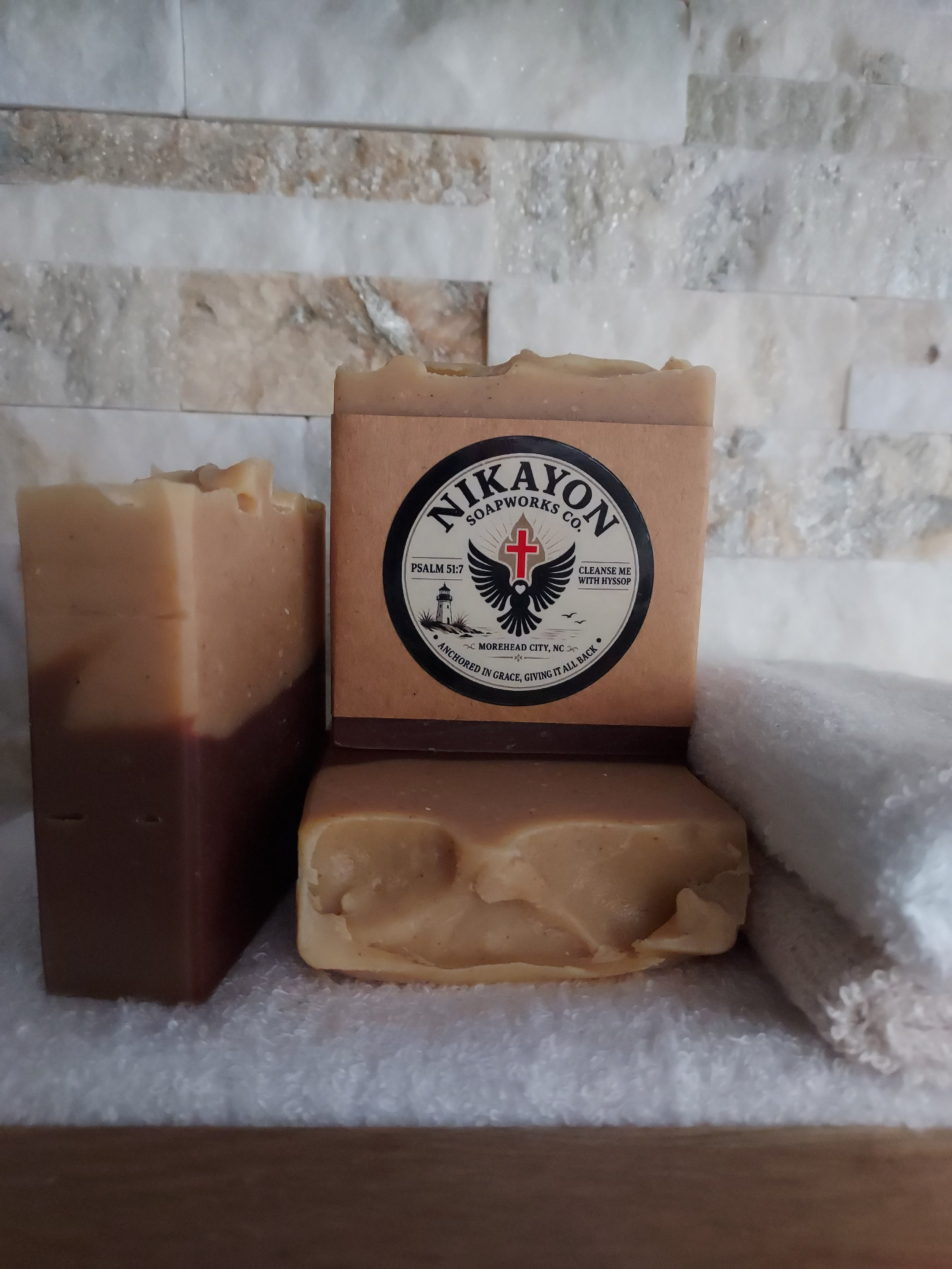
💪 Designed for the man who appreciates simplicity and quality. This hardworking, all-in-one bar gently cleanses hair and body, leaving you feeling refreshed, invigorated, and ready to take on the day. Crafted with nourishing ingredients and a clean, masculine scent for everyday freshness.
Each bar weighs approximately 5.5 oz. Handcrafted with care, every bar is unique, with slight variations in size, shape, weight, and natural color—a natural part of handmade soap.
Ingredients: Goat Milk, Olive Oil, Coconut Oil, Castor Oil, Avocado Oil, Cocoa Butter, Sodium Hydroxide and Cedarwood Atlas, Fir Needle, Light Patchouli and Juniper Berry Essential Oils.
“Rugged Freshness. Naturally Crafted”
📜 Proverbs 27:17—Iron sharpens iron, and one person sharpens another.
A common method to sharpen steel, or iron, is to use a similar piece of metal. When the two scrape against each other, both pieces are shaped and rough spots are removed. Similarly, two people can interact and help refine each other. Other proverbs note the importance of hearing other people's views (Proverbs 11:14; 18:17; 27:9). Of particular importance is that this lesson implies a constructive level of conflict: the two pieces don't become sharper unless they bump into each other (Proverbs 27:6)! Fellow believers who never challenge or question one another are liable to remain dull.
Numerous biblical examples show the learning value present in relationships. Jesus may have sent His disciples out two by two because each one would sharpen the other's testimony. Mentoring is also a good example of one Christian improving the spiritual life of the other. The apostle Paul mentored the younger Timothy. Furthermore, he encouraged Timothy to mentor others. He writes in 2 Timothy 2:2: "What you have heard from me in the presence of many witnesses entrust to faithful men, who will be able to teach others also." David and Jonathan are a good example of two men who improved each other's lives. Friendship can help two people enjoy a stronger faith and a buoyant spirit. Friends can encourage each other, laugh together, sympathize together, and pray together.
It is crucially important to carefully choose who we "brush up against." A good friend can lead us to self-improvement and greater godliness (Proverbs 12:5; 15:22; 17:17). Ungodly people are likely to lead us towards sin and disaster (Proverbs 13:20; 22:24–25; 23:20).
Source Attribution: Scripture commentary provided by BibleRef.
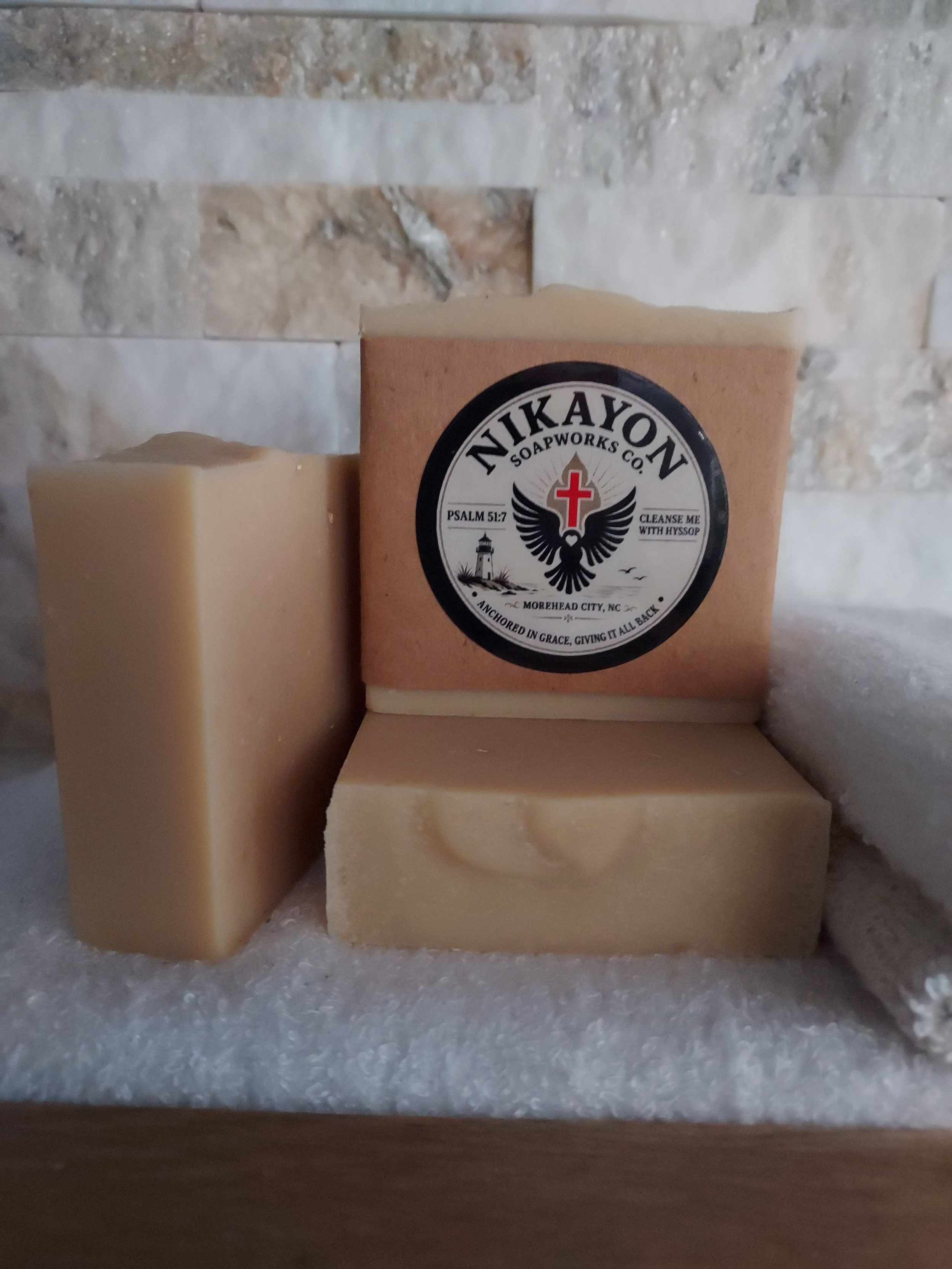
Approved by our Nikayon family member, Freddi! 🐾
🐶 Give your four-legged friend a little heavenly pampering! Our premium handcrafted bar gently cleanses your dog's coat, helping wash away dirt and odors while leaving them feeling fresh and clean. Made with thoughtfully selected ingredients for a refreshing bath-time experience.
Each bar weighs approximately 4 oz. Handcrafted with care, every bar is unique, with slight variations in size, shape, weight, and natural color—a natural part of handmade soap.
Ingredients: Goat Milk, Ground Oatmeal, Avocado Oil, Sweet Almond Oil, Olive Oil, Coconut Oil, Castor Oil, Shea Butter and Sodium Hydroxide.
“A Little Heavenly Care for Your Faithful Friend”
✝️ Proverbs 12:10 The righteous cares about his animal’s health, but even the merciful acts of the wicked are cruel.
This verse sets an important perspective for a biblical view of animal rights. While God created all animals for the use of mankind (Genesis 1:28; 9:3), He also expects us to respect and care for those resources, not to abuse them. In fact, Solomon connects a person's righteousness to their treatment of animals. The point is not that those who love God must be vegetarians nor is this giving an idolized sense of animal values. The message is that a godly perspective on creation naturally leads to respect for all creatures. The God-fearing (Proverbs 1:7) person will treat them kindly, feed them properly, and care for them when they hurt.
In his regard for his animals, the righteous person resembles the Good Shepherd, Jesus. The Good Shepherd cares for the basic needs of His flock (Psalm 23:2). He protects them (John 10:3–4, 11). In a related passage, Deuteronomy 25:4 commanded the farmers of Israel not to muzzle an ox when it is treading out the grain. A cruel farmer would muzzle his ox to prevent it from eating some grain. While this might save some time, and a tiny amount of harvest, it is unkind and unhelpful to the animal.
In contrast to godly attitudes, a wicked person's approach to animals can't be anything more than cruelty. Even their "mercy," in such a case, is relatively harsh and abusive. Cruelty to animals is seen today in staged dog fights, in starving animals, in animal beatings, in neglecting proper care of pets, and in abandoning helpless animals. Believers need to be careful not to elevate animals to equal human beings (Genesis 1:26–27). However, preventing animal cruelty and rescuing abused animals both reflect a godly attitude towards creation.
Source Attribution: Scripture commentary provided by BibleRef.
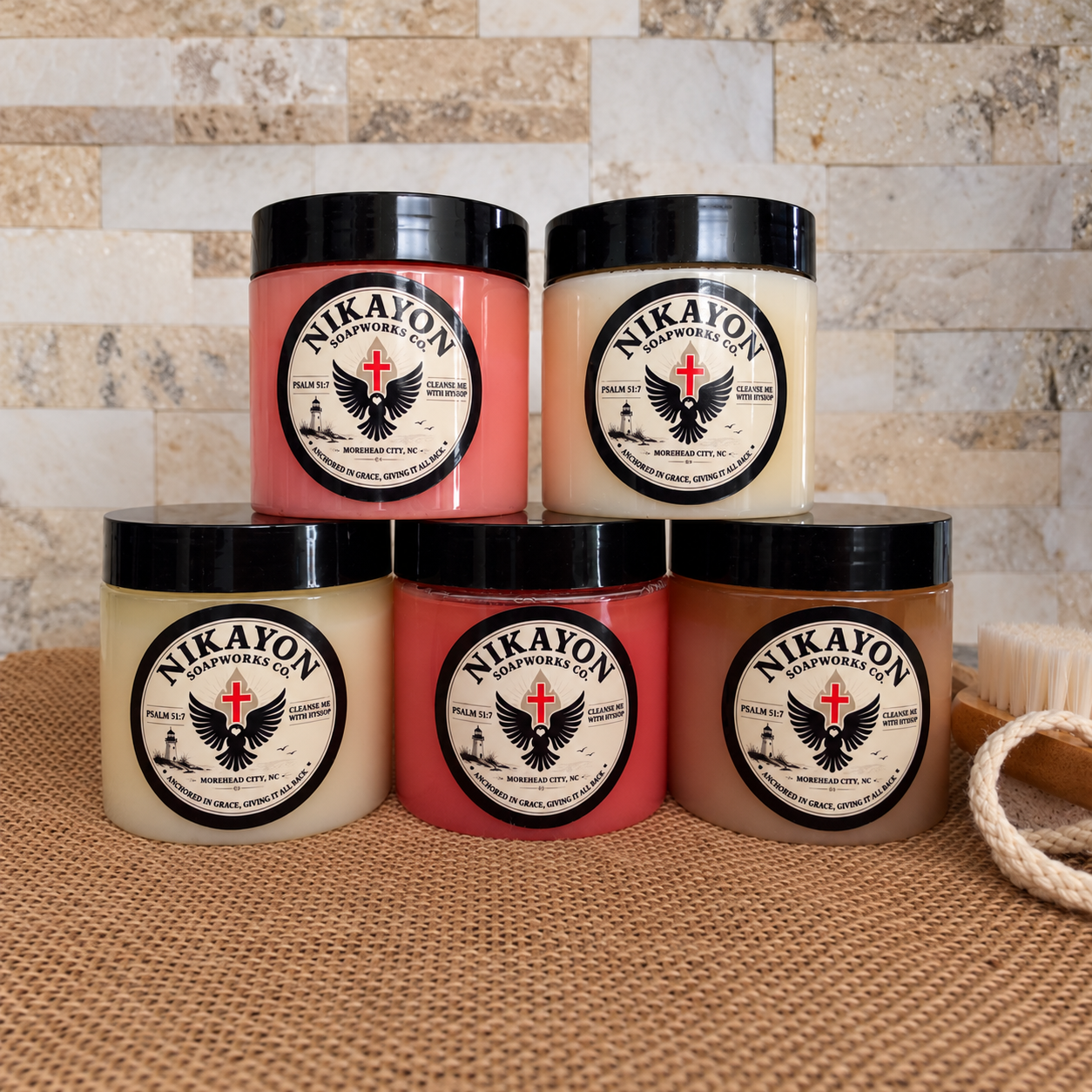
🌿 Treat your skin to a little natural goodness with our handcrafted sugar scrubs. Made in small batches, each scrub gently exfoliates away dull, dry skin while leaving it feeling soft, smooth, and refreshed. Enjoy a luxurious, spa-like experience with delightful fragrances and nourishing ingredients that make every use a moment of self-care.
Ingredients: Granulated White Sugar, Shea Butter, Coco Butter, Coconut Oil, Sweet Almond Oil, Avocado Oil, Vitamin E, Tapioca Flour, Polysorbate 80, Optiphen and Fragrance.
“A little sweetness for your skin, crafted with care”
✝️ Psalm 24:4—The one who has clean hands and a pure heart, who has not appealed to what is false, and who has not sworn deceitfully.
The answer to the question posed in verse 3 is given here. Proper worship of God requires clean hands, a pure heart, and integrity. A person cannot truly worship God unless they are submitted to Him in faith, and that submission cannot occur until they have been redeemed by salvation. The question is not whether or not a person is capable of singing or saying words; it's whether their efforts are appropriate.
The Levites who transported the ark had to be ceremonially clean, as did the priests. Exodus 30:18–21 instructs Aaron, the high priest, and his sons to wash their hands and feet at the laver in the tabernacle before ministering to the Lord. Isaiah 52:11 commands: "Purify yourselves, you who bear the vessels of the LORD."
Having "clean hands" refers to the performance of righteous deeds, as well as avoidance of evil deeds. This imagery is reflected in modern English expressions such as "willing to get his hands dirty," which implies someone willing to do evil to accomplish their goals. Pilate's dramatic washing of his hands declared his opinion that he was completely innocent of what happened to Jesus (Matthew 27:24).
Having a pure heart likely refers to a person's godly thoughts and character. Further, the person who legitimately enters the Lord's presence in worship does not worship idols: anything or anyone other than the one true God.
A true worshipper does not practice deception (John 4:24). He is a person of integrity. The Lord cannot be fooled. He knows our thoughts, motives, deeds, and speech, and He hates hypocrisy. Jesus rebuked the scribes and Pharisees because they appeared righteous but were full of hypocrisy and lawlessness (Matthew 23:28).
Source Attribution: Scripture commentary provided by BibleRef.
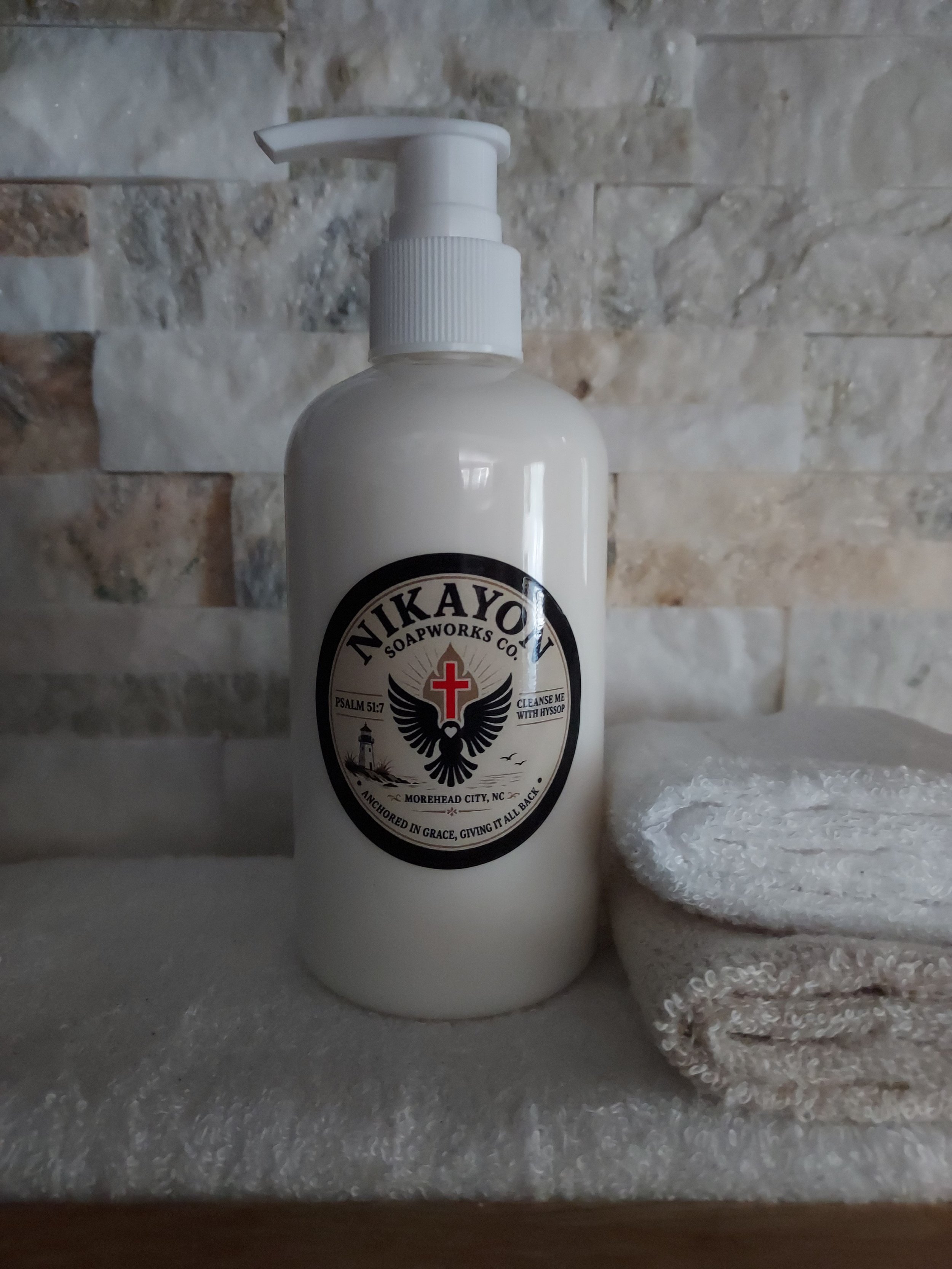
🍃 Inspired by the Hebrew word Rapha, meaning “to heal,” our Rapha Lotion represents the beauty of restoration and renewal. Enjoy a soothing moment of self-care as this moisturizing lotion helps leave your skin feeling soft, smooth, and nourished.
Ingredients: Distilled Water, Goat Milk, Sweet Almond Oil, Avocado Oil, Emulsifying Wax, Stearic Acid, Optiphen and Fragrance. Bottle size 8 oz.
“Nourish the Skin, Celebrate His Grace”
✝️ Exodus 15:26—He said, "If you will carefully obey the Lord your God, do what is right in his sight, pay attention to his commands, and keep all his statutes, I will not inflict any illnesses on you that I inflicted on the Egyptians. For I am the Lord who heals you."
When Israel, traveling through the wilderness (Exodus 15:22–23), lacked water, the Lord provided it. He turned an undrinkable source into something usable (Exodus 15:25). This becomes a teaching moment for the people, as well as a test. Here that test is laid out in more detail.
God offers a conditional statement. His words imply four requirements, which are really two each repeated twice. Two references are made to listening, using words which imply attention and the intent to obey. The other two highlight that the people are to act on God's commands by obeying them. Later, the Lord will provide laws and statutes through Moses to explain His will more completely for the nation of Israel (Exodus 20:1–17; Hebrews 9:19–20).
Obedience would keep Israel from suffering as did the Egyptians who enslaved them (Exodus 1:11–14; 12:40–41). This passage is not specific about the "diseases" in mind (Deuteronomy 7:15; 28:60). However, some of the plagues which God brought on Egypt involved ailments like boils (Exodus 9:10; Deuteronomy 28:27). Following the Lord's instructions diligently would help keep the people from unnecessary suffering. Disobedience would bring negative consequences (Numbers 12:9–13).
Source Attribution: Scripture commentary provided by BibleRef.